
Frequently Asked Questions About Roof Tile Making Machines
Buying a roof tile making machine isn't like buying groceries; naturally, you want to understand the details before committing. Having worked in this industry for over a decade, we find that customers almost always ask the same few questions: Will it fit in my factory? Is the cutting precise? Will high-strength steel crack during processing? Is it a hassle to change specifications? Is it easy to repair if it breaks? What if the voltage doesn't match? Today, I’ll answer these questions one by one.
Workshop Space and Installation Requirements
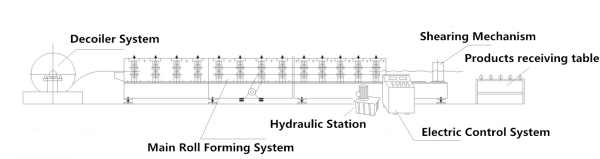
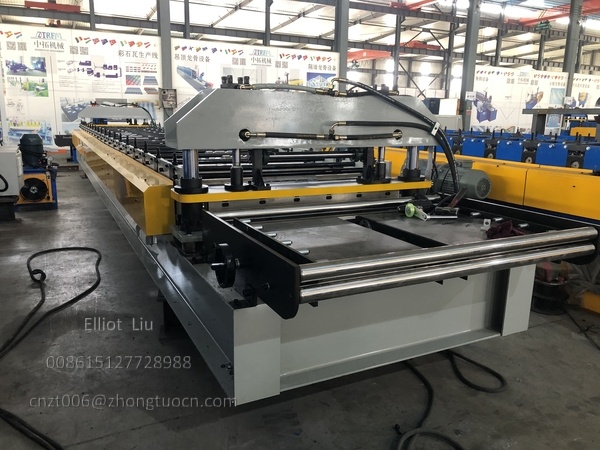
A lot of customers ask me first, will this machine fit in my workshop? Our roof tile making machine has a main forming unit that is about 11500 mm long. When you add the decoiler and the receiving tables, the total working space you need is roughly 20 meters long, 2.5 meters wide, and 1.2 meters high. That is actually quite compact compared to many other lines. Most normal workshops can handle it.
If your workshop is shorter, we can adjust how the receiving table is arranged. Just tell us your actual workshop size before you order, and we will help you figure it out.
Cutting Accuracy
If the panel length is not accurate, rainwater can leak through the overlaps. Our roof tile making machine gives you a cutting tolerance of plus or minus 1.0 mm for a 3 meter length. How do we get that accuracy? We use a PLC controller with an Omron encoder to measure the length. When the sheet reaches the set length, it triggers the hydraulic cutting. The blades are made of Cr12 quenched steel, which is thicker and lasts longer than normal blades.
Also, the cutting frame has a double pillar design. That means it does not shake or move sideways when cutting. You just set the length and the quantity you want, and the machine cuts each piece neatly one by one.
Material Forming Capabilities
Some customers use materials with high strength and hardness; will the rollers shatter or the edges crack during operation? We’ve specifically addressed this issue:
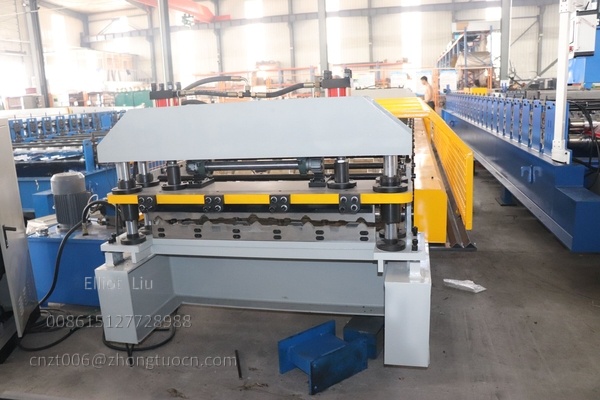
Progressive forming: The system gradually shapes the material across 20 roller stations rather than bending it sharply all at once which prevents cracking.
Rollers: Constructed from 45# steel with hard chrome plating, the rollers feature a hard and wear resistant surface that handles even tough materials with ease.
Shafts:Forged from 45# steel with quenching treatment, these 80mm diameter shafts remain robust and rigid to ensure zero bending.
Drive system: Dual-chain transmission provides ample power and prevents slippage.
Whether you use standard GI or high-strength PPGI/PPGL, the line runs smoothly without edge cracking or roller damage.

Changing Width and Switching Profiles
Different projects use different panel widths. So is it a hassle to change the width setting? Our roof tile making machine comes with a wheel type width adjustment on the entry guide. You just turn the hand wheel a few times to set the new width. No tools needed, no unscrewing bolts.
We also include a manual pre shearing device. When you change coils, you only cut off the joint part, so you do not waste a whole section of raw material. Switching from one width to another takes about ten minutes. This works really well if you do small batches and many different profile types.
Equipment Maintenance and Repair
Machines inevitably develop minor issues over time—are they easy to fix? We prioritized ease of maintenance during the design phase:
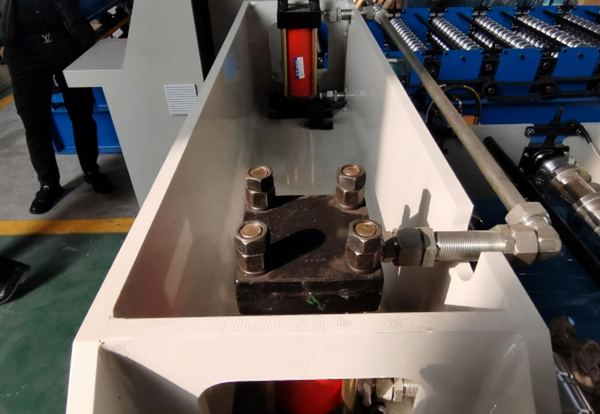
Oil cylinders: The cylinders adopt a bolted connection rather than welding so if a part fails you simply replace that specific component without needing hot work or cutting.
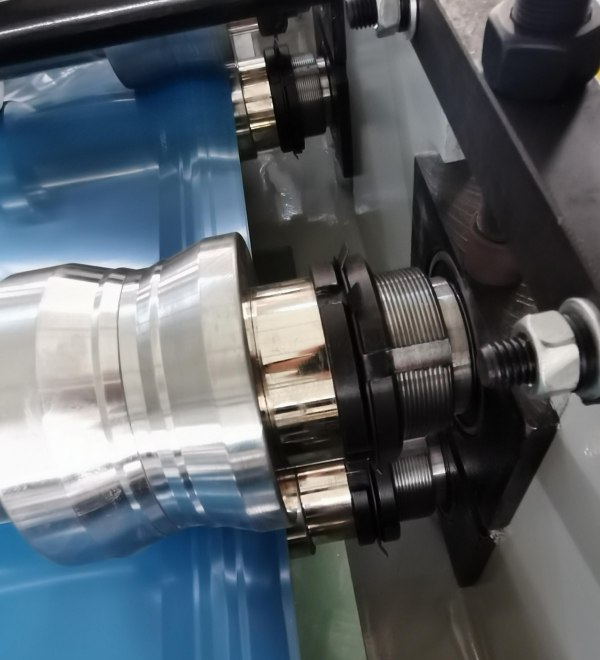
Roller positioning: Double bolts with spring locking mechanisms secure the rollers so they will not shift during long term operation which eliminates the need for frequent adjustments.
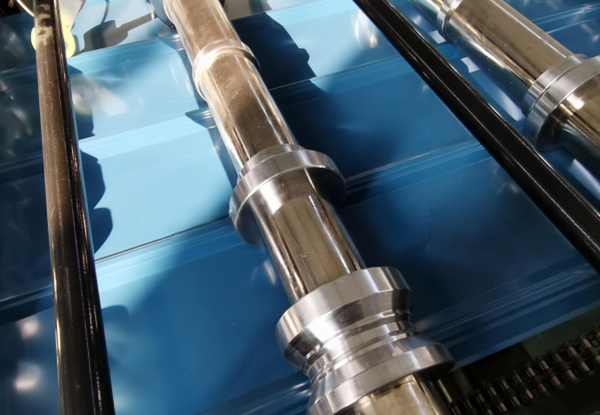
Roller spacers:The spacers receive zinc treatment which ensures they never rust and require no painting and will not discolor or contaminate the sheet surface.
Blade fastening: Secured by double bolts; easy to disassemble, making blade replacement a quick, minutes-long task.
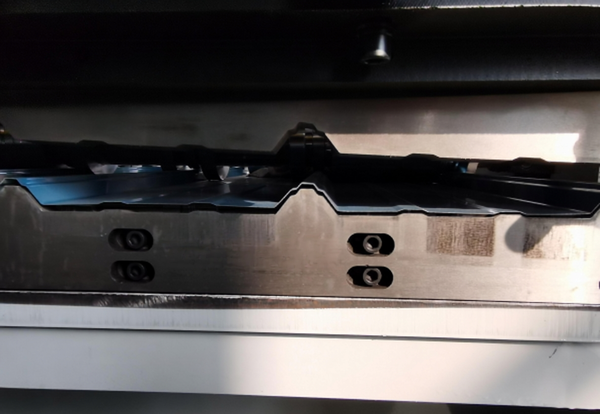
With standard lubrication and regular inspections, this production line will serve you reliably for years.
Specifications Table
| Category | Parameter | Specification |
| Main Parameters | Material Thickness | 0.16 - 0.55 mm |
| Raw Material Width | 1000 mm | |
| Effective Width | 812 mm | |
| Working Speed | 0 - 20 m/min | |
| Processing Material | GI, PPGI, PPGL, G550 FULL HARD | |
| Working Space | Approx. 20m (L) x 2.5m (W) x 1.2m (H) | |
| Decoiler System | Type | Manual Decoiler |
| Loading Capacity | 5 Tons | |
| Uncoiling Width | 1000 mm | |
| Inner Diameter | 450 - 610 mm | |
| Quantity | 2 Sets | |
| Main Roll Forming System | Roller Material | 45# steel with surface hard chromium plating |
| Shaft Material | 45# steel with quench treatment | |
| Shaft Diameter | Φ 80 mm | |
| Number of Rollers | 20 rollers (gradually forming type) | |
| Drive Mode | Chain (double type) | |
| Frame | 400 H steel welded | |
| Main Power | 7.5 kW | |
| Voltage | 380 V 50 Hz 3 phase or as required | |
| Shearing Mechanism | Control | Automatic cutting controlled by PLC |
| Blade Material | Cr12 quenched | |
| Power Supply | Hydraulic power | |
| Structure | Double pillar frame for stability | |
| Components | 1 set of blade, 1 hydraulic tank, 1 cutter machine | |
| Products Receiving Table | Table Length | 3 m per set |
| Quantity | 2 sets | |
| Type | Welded steel sheet and supported roller | |
| Hydraulic Station | Power | 5.5 kW |
| Hydraulic Oil | 46# hydraulic oil | |
| Electric Control System | PLC Brand | Siemens |
| Touch Screen | Omron from Japan | |
| Language Support | Chinese & English & Spanish | |
| Voltage | 380 V 50 Hz 3 phase or as required | |
| Length Tolerance | ±1.0 mm |
Voltage and Electrical Control for Export
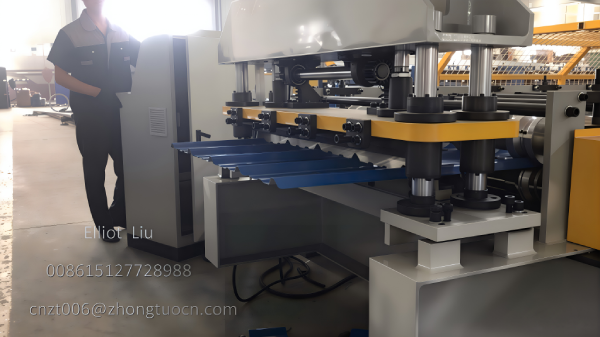
Export machines always have the voltage problem. Our standard voltage for roof tile making machine is 380V 50Hz 3 phase. But we can customize the voltage to match your local grid. Just tell us what you need when you order.
- Custom voltage: 220V, 415V, 440V, or 60Hz. Just tell us when you order.
- Control system: Siemens transducer plus Omron encoder plus touch screen.
- Touch screen language: Chinese, English, Spanish. Your local workers can learn it easily.
The interface uses icons, so it is very straightforward. A new operator can learn the basics in half a day.
Optional Features Customers Care About Most
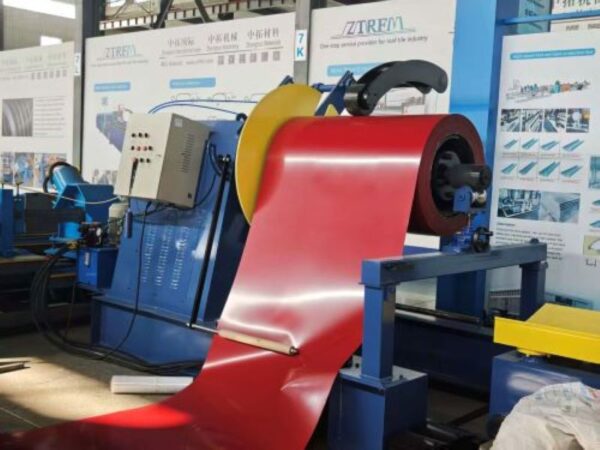
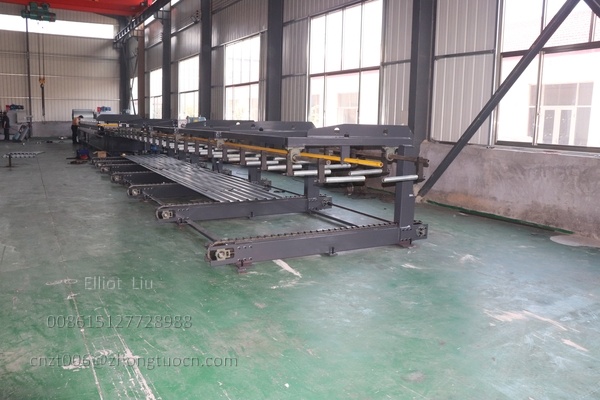
Many people ask if they should add the automatic hydraulic decoiler and the automatic roofing sheet stacker and here is the straightforward answer. If you change coils more than three times a day or if labor costs are high then adding these two components is definitely a smart investment. The automatic hydraulic decoiler features speed sensing and an automatic coil loading cart; it allows for coil changes in just two minutes, saving the labor of one person. The automatic roofing sheet stacker handles automatic unloading and removal, saving yet another person's labor.
Combined, these two units pay for themselves within six to twelve months. Moreover, they are optional add-ons; you can purchase the main machine first and add them later, as we have already reserved the necessary mounting space.
Is there anything else you would like to ask?
The above covers the questions we are asked most frequently. However, since every factory's situation is unique, you may have other questions.
For example: Will the equipment fit in your factory space? Can we produce your specific panel profile? What is the delivery lead time? What are the payment terms?
Feel free to ask us directly.
Contact: Elliot liu
Email: cnzt006@zhongtuocn.com
WhatsApp: 008615127728988