

Decoiler Feeder Machine Answers 3 Critical Questions Before Purchase
-
Jul, Tue, 2026
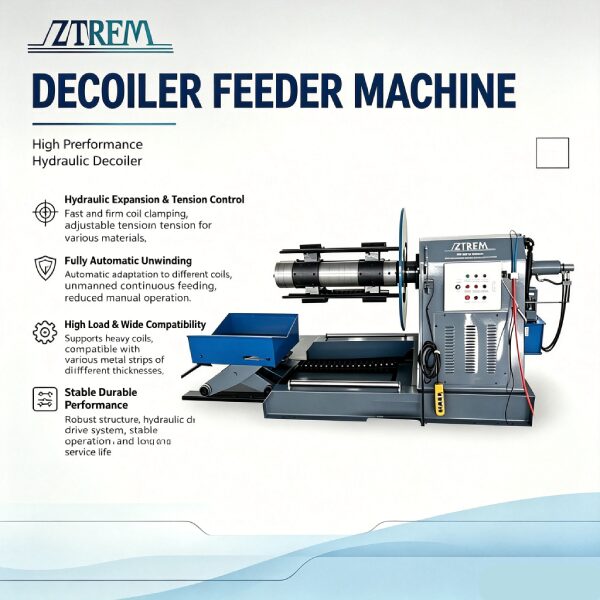
When you typed your search query into the bar, what you really wanted to know was probably something else: which decoiler feeder machine is right for my production line?
The market offers many types. Cantilever type, double mandrel type, manual, electric, hydraulic. Capacities range from a few hundred kilograms to over twenty tons. With so many choices, you worry about picking the wrong model and hurting your output. You worry the equipment won't match your existing line. You worry about finding replacement parts later. We completely understand these concerns.
To help you decide, you don't need to study every single type. You just need to figure out three things: your coil weight, your coil inner diameter, and your downstream line speed. Leave the rest to us. Let me walk you through a few key aspects to help you build your own selection criteria.
Application Areas
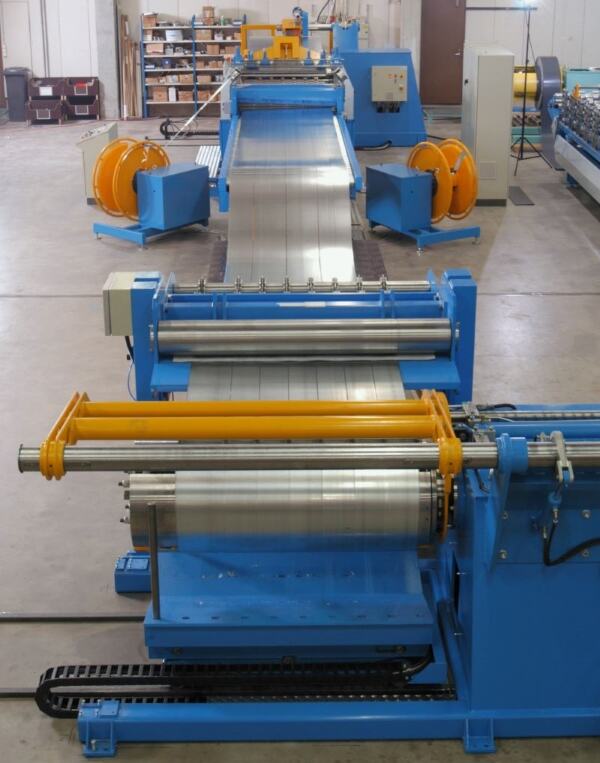
This decoiler feeder machine works well on many metal processing lines:
-
Cable tray roll forming lines
-
Split anchor bolt forming machines
-
Storage rack upright forming machines
-
Roof panel forming machines
What Makes This Machine Stand Out
-
Universal load capacity covers 5, 6, and 7 tons. One model handles the most common coil weights in most factories.
-
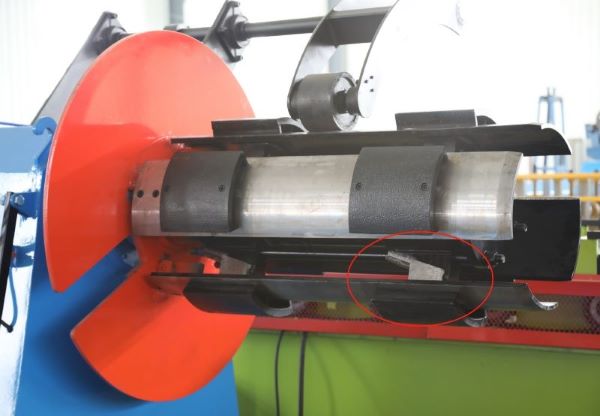
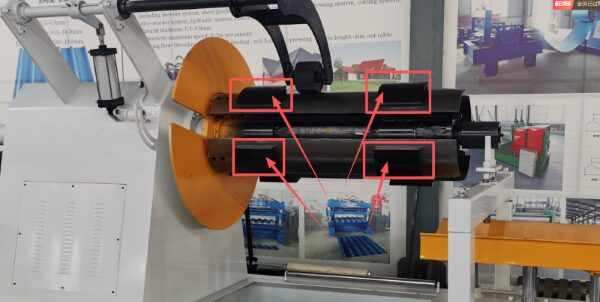
Slider type expansion replaces the old four jaw design. It won't damage the coil inner wall, and uncoiling stays more stable.
-
Adjustable spacers make inner diameter changes simple. One machine handles multiple coil specifications.
-
Hydraulic expansion plus VFD speed control lets you adjust speed freely to match different line speeds.
-
Wireless remote control keeps workers away from rotating parts, improving workplace safety.
Start With These Three Numbers
When you look at all the decoiler types available, focus on three hard metrics: coil weight, coil width, and inner diameter.
Coil weight determines what capacity machine you need. Capacities range from 0.2 tons to over 20 tons. Too small and the machine can't handle your coils. Too big and you waste budget. This decoiler feeder machine covers 5, 6, and 7 tons. That range matches what most factories use daily.
Coil width determines the machine's working range. This equipment handles widths from 0 to 1250 mm, which covers most strip steel and sheet processing needs.
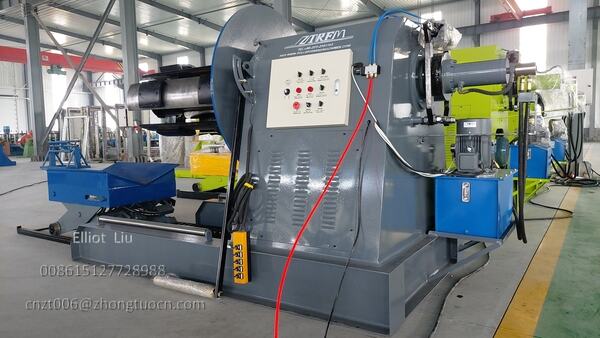
Inner diameter determines whether the coil can mount on the mandrel properly. Coils from different mills come with different inner diameters. 470 mm, 530 mm, 570 mm, 630 mm. The mandrel on this machine comes with removable adjustment spacers. You can switch freely within the 470 to 610 mm range. One machine covers multiple inner diameter specs.
Hydraulic vs Mechanical
You might also wonder: what's the real difference between a hydraulic decoiler and a mechanical one?
Simply put, a mechanical decoiler uses manual or motor driven expansion. It suits light coils and low speed lines. A hydraulic decoiler uses hydraulic system driven expansion. It delivers more force and applies it more evenly. It suits heavy coils and high speed continuous production.
If your coils exceed 3 tons, or your line runs at high speed continuously, hydraulic is the safer choice. This equipment uses hydraulic expansion. The expansion force distributes evenly, so the coil won't slip or wander on the mandrel. The uncoiling process stays smooth and stable.
Technical Reference Table
| Parameter | Value from Quotation |
|---|---|
| Machine dimensions (L × W × H) | 3.4m × 1.6m × 1.8m |
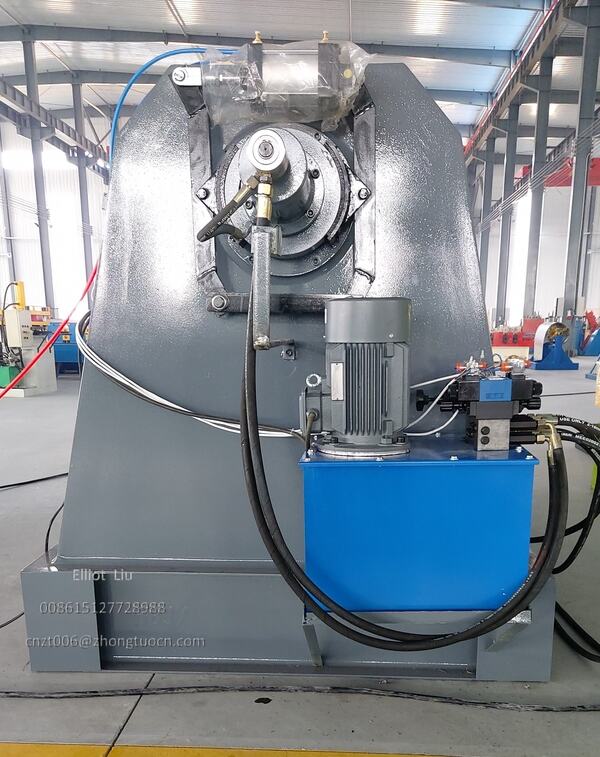
| Hydraulic power unit | 3kw, 380V, 3 solenoid valves |
| Main unit power | 4kw |
| Frame construction | 300H steel base, 14mm steel plate box body (welded) |
| Main mandrel | Thick wall seamless steel tube, shaft diameter 194*45mm |
| Coil width range | 0-1250mm |
| Coil inner diameter range | 470-530mm / 570-630mm, ±20mm (spacer adjustment) |
| Rated load capacity | 5 tons / 6 tons / 7 tons universal |
Choosing the Right Model
The market offers many decoiler models. But behind all those models, the selection logic stays simple. You don't need to study every structure type and every capacity option. That would waste your time.
What really matters is what your production line needs. How fast does your downstream equipment run? How often do you change coils? How much floor space do you have? These are the factors that determine which model fits you. A good machine isn't the one with the highest specs. It's the one that works most smoothly with your existing line.
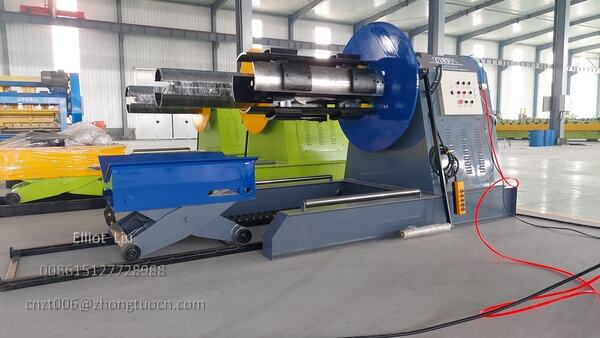
This decoiler feeder machine covers the mainstream needs of 5 to 7 tons and widths up to 1250 mm. If your operation falls within this range, this machine likely offers the best cost to performance ratio. If your needs go beyond this range, that's fine too. We can adjust the configuration based on your specific situation.
How to Tell If a Decoiler Is Reliable
A reliable decoiler isn't just about how much weight it can hold. Pay attention to three more details.
Look at the expansion method. The traditional four jaw design leaves indentations on the coil inner wall, causing material waste and unstable uncoiling. Slider type expansion moves multiple sliders radially at the same time. After expansion, the inner core forms a near perfect circle without damaging the inner wall.
Look at the mandrel material. A mandrel machined from thick wall seamless steel tubing offers higher strength and better fatigue resistance than ordinary welded pipe. It won't bend or deform easily under long term heavy loads.
Look at the control method. Wireless remote control lets workers stand at a safe distance while handling expansion, braking, and coil car movements. It's convenient and safer.
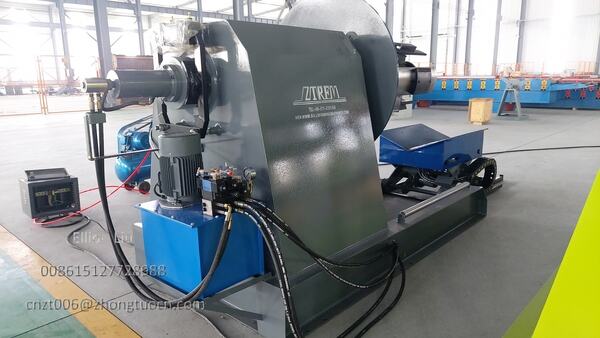
If you're still unsure about which model to choose, or if your coils exceed 7 tons, or if your workshop has limited space and needs special dimensions, feel free to reach out. We can give you a tailored configuration recommendation based on your specific working conditions with a decoiler feeder machine. Coil weight, inner diameter, line speed, floor layout. Just send us your numbers, and we'll send you a proposal.
Contact Person: [Name]
Phone / WhatsApp: [Your number]
Email: [Your email]
Website: [Your website]