
Roll Forming Machine for Shelf Column 5 Key Parts Explained
Many new customers in the storage rack industry ask the same question when they first see a drawing: what are all the parts of a rack called? Uprights, beams, shelves, braces, clips. Each part has its place. Knowing these names helps you figure out what you actually need to produce.
But knowing the names is not enough. Some customers bought upright forming machines and ended up with uprights that didn't match their beams. The hole spacing was off. The beams wouldn't lock in. Whole batches of racks couldn't be assembled. The problem was not with the machine itself. It came from not understanding how the parts fit together.
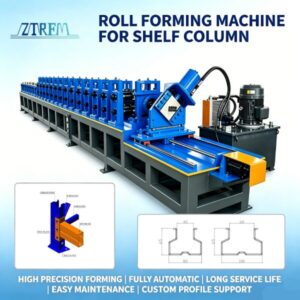
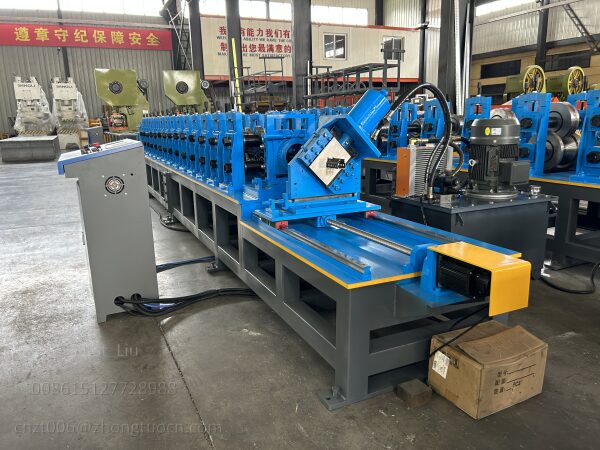
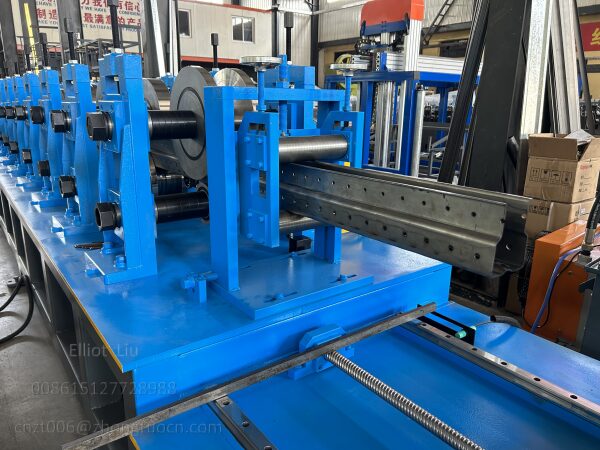
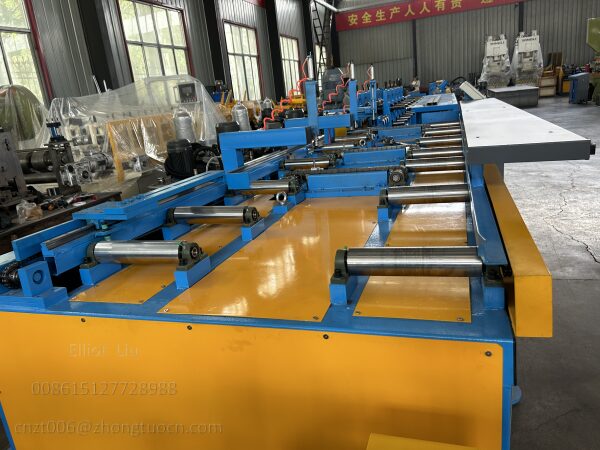
Our roll forming machine for shelf column solves the production bottleneck for uprights. It turns steel coil into finished parts in one continuous run.
Machine Strengths
What can this roll forming machine for shelf column do for you?
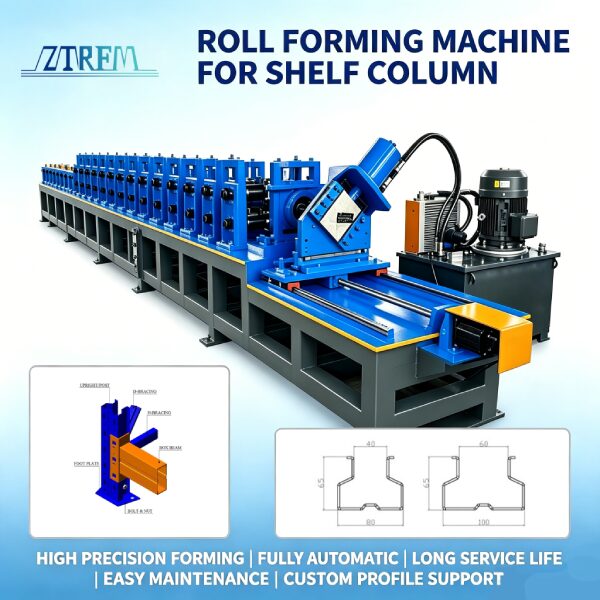
The upright is the most load‑bearing part of a rack. Our machine uses 20 roller stations to form the shape gradually. Each station handles only a small amount of deformation. The material gets uniform pressure, so the finished upright stays stable and doesn't spring back. When it's time to assemble the rack, beams lock in without hammering.
Different orders need different upright heights. The servo tracking shear lets you set any length. The machine cuts on the move without stopping. Production speed stays above 20 meters per minute, giving you solid output per shift.
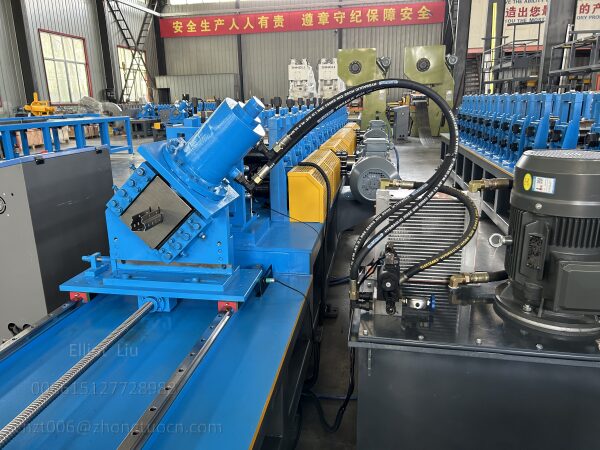
Rack beam heights need frequent adjustment. The hole positions on the upright must be accurate. Our servo feeder uses encoder feedback for closed loop control. Each feeding error gets corrected immediately. Hole spacing stays uniform, and beam clips insert smoothly.
Order specifications can change anytime. The machine switches between 65×80 and 65×100 sections freely. Just recall the saved parameters from the PLC. No mold changes. No second production line.
What Parts Make Up a Rack
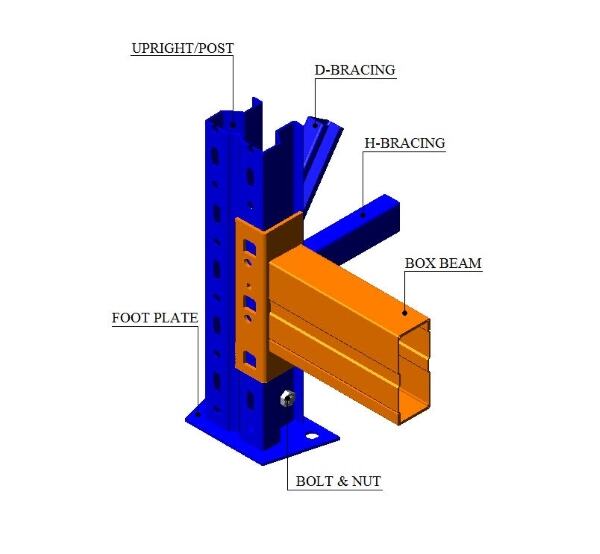
A complete rack system typically consists of these parts:
-
Upright: the vertical supporting frame that carries all vertical loads
-
Beam: the horizontal load‑bearing member that connects uprights and directly supports shelves or pallets
-
Shelf: the flat panel placed on beams for direct product storage
-
Brace: the diagonal reinforcement between uprights that increases overall rack stability
-
Clip: the metal piece at beam ends that connects to upright holes for height adjustment
The upright is the most critical load‑bearing part. If upright quality fails, the entire rack system becomes unsafe. Our roll forming machine for shelf column produces that critical part with consistent accuracy. So where do these finished uprights actually go?
Applications
The uprights from this roll forming machine for shelf column appear wherever vertical storage is needed.
-
Pallet racks and heavy duty racks in logistics centers
-
Display shelving in supermarkets and retail distribution centers
-
Automated high bay racks in e‑commerce warehouses
-
Raw material and finished goods storage in manufacturing plants
-
Galvanized rust‑resistant racks in cold storage and food logistics
-
Adjustable rack systems in third‑party logistics warehouses
No matter the setting, upright dimensional accuracy and load capacity determine rack safety and service life. Uprights from one machine can end up in factory workshops, retail stores, cold chain warehouses, or e‑commerce fulfillment centers. The upright holds up the entire storage system, and different application scenes have different requirements for how parts fit together.
Know the Parts to Choose the Right Equipment
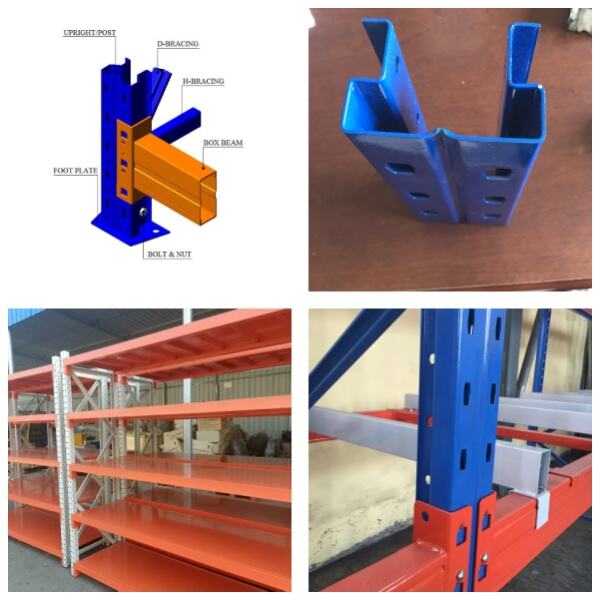
Let's look at each of the 5 core rack parts. Understanding them helps you decide which roll forming machine for shelf column fits your production needs.
The upright is the vertical frame that takes all vertical loads. It comes in 65×80 and 65×100 sections. The first works for medium duty racks, the second for heavy duty storage. The hole accuracy on the upright surface directly affects beam installation.
The beam carries loads horizontally. It has clips on both ends. The clips insert into upright holes to form a stable structure. Beam sections are mostly P shape or lock shape, with thickness typically 1.5 to 2.0mm.
The shelf is the flat surface for products. It can be steel, wood, or mesh. The shelf needs good flatness without warping.
Braces improve overall rack stability. Under full load, uprights tend to bend sideways. Braces are installed diagonally to spread lateral forces to adjacent uprights. Without braces, the rack wobbles.
The clip connects beams to uprights. Clip thickness and hook shape must match the upright holes precisely. If it's too thin it deforms. If the hook shape is wrong it won't insert or will come loose.
Know the Part Names to Choose the Right Production Equipment
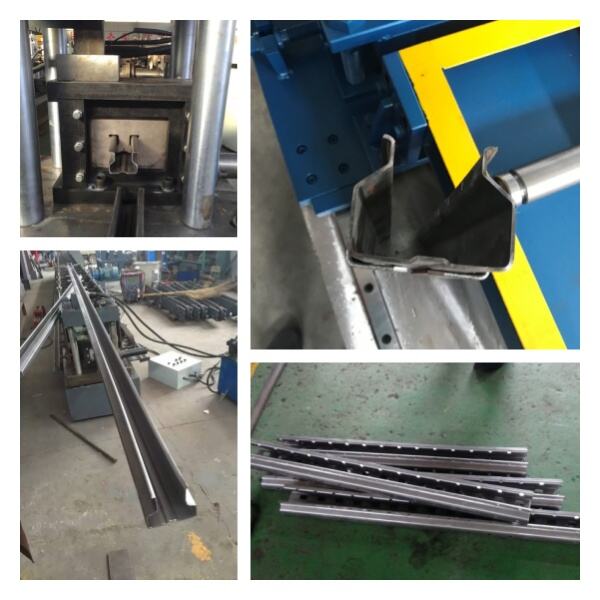
Before choosing equipment, confirm which part you mainly produce. Uprights are the hardest to make. They need to meet three conditions: sufficient section modulus, accurate hole positions, and consistent length tolerance. Our roll forming machine for shelf column meets those demands. Between uprights and beams, you also need to consider thickness matching, hole alignment, and production capacity coordination.
Selection Guide
Before picking a roll forming machine for shelf column, ask yourself three questions.
What thickness upright do you plan to produce? Common rack upright thickness ranges from 1.5mm to 3.0mm. Different thicknesses need different roller designs and motor power. If you mainly make heavy duty racks, go with 2.0mm or thicker.
How many uprights do you need per day? Your output target determines line speed configuration. Higher speed demands more from the drive and control systems. If your daily volume is modest, a basic setup works. If you need to deliver hundreds of rack sets per day, go with the 22kW high spec main motor.
How many section sizes do you need to produce? If you only run one size, choose the fixed model. If you switch sizes often, get the quick changeover option. Voltage customizes to your local standard. The control panel supports multiple languages for overseas operators.
Technical Specifications
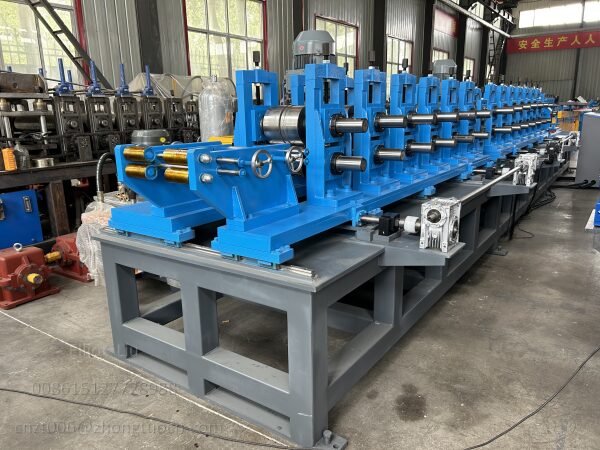
The following are the key specifications of our roll forming machine for shelf column.
| Parameter | Value |
|---|---|
| Material | Cold rolled steel, galvanized steel |
| Thickness range | 2.0 to 2.5mm |
| Forming speed | Over 20m/min |
| Main motor power | 22kW |
| Hydraulic power | 11kW |
| Working voltage | 380V 50Hz 3 phase |
| Decoiler capacity | 5 tons |
| Roller material | Gcr12 hardened |
| Number of roller stations | 20 |
| Punching press | 80 ton pneumatic |
| Cutting method | Servo tracking shear |
| Section sizes | 65×80mm, 65×100mm |
We Make Equipment for All Rack Parts
We covered the 5 core rack parts above. We offer a full series of production equipment for each of them.
Uprights use the roll forming machine for shelf column. That's our main model. Beams use a rack beam roll forming machine. Shelves use a shelf roll forming line. Braces use a C channel forming machine or dedicated brace forming equipment. Clips use a stamping production line.
If you make complete rack systems, we provide complete equipment solutions. The capacities and speeds across all lines can be matched. This avoids situations where upright production outruns beam production. And when you buy all equipment from one supplier, commissioning and after sales support become much easier.
Knowing the names of rack parts is only the first step. The more important thing is finding the right production equipment for your product specifications. Whether you mainly produce uprights, beams, or shelves, we have the roll forming machine for shelf column and other equipment to help you do it well. Bring your drawings and output targets. We'll help you put together the right equipment plan.
Contact: Elliot liu
Email: cnzt006@zhongtuocn.com
WhatsApp: 008615127728988