
A Hydraulic Slitting Line Built as One System
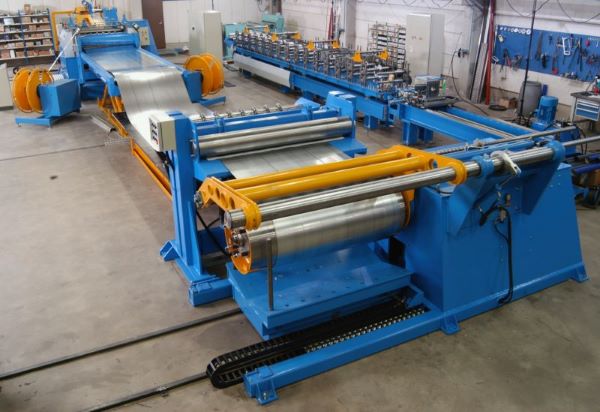
You don't look at this line from the control room. You walk along it – 23 meters from the coil car to the exit. You watch the hydraulic decoiler take in a 15‑ton coil, the slitter cut through cold steel, and the recoiler wrap the strips back into tight rolls. No hesitation. No jerking.
That is the difference between a machine that is assembled and a machine that is designed as one system.
We did not simply bolt together a decoiler, a slitter, and a recoiler. We laid them out in a straight line – not only to save floor space (though it does save space) – but because material flows best when it never has to turn a corner. Every wheel, every guide, every tension stand is there for one reason: to keep the strip flat, centered, and moving at the same steady speed from start to finish.
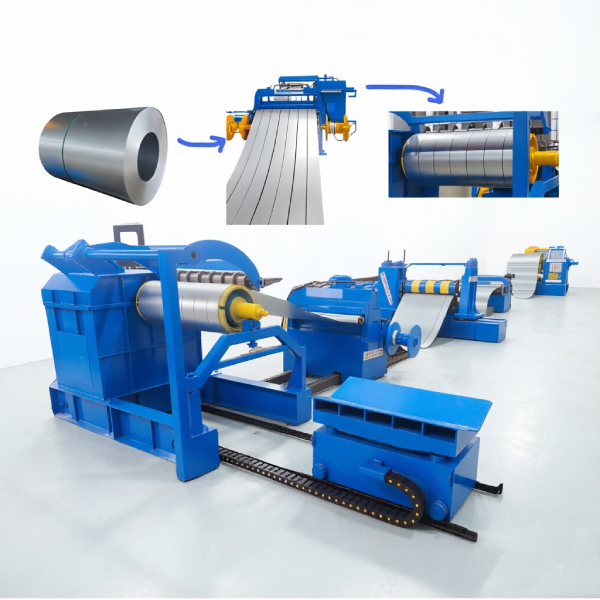
Spec List (all data from original document)
| Item | Data |
|---|---|
| Whole Line Floor Space | 23m × 8m |
| Adjustable Line Speed | 0~60m/min |
| Adapted Material Thickness | 0.3~3.5mm |
| Industrial Working Voltage | 380V/60Hz/3Phase |
| Total Matched Power | Around 220Kw |
| Max Coil Bearing Weight | 15T |
| Size Tolerance Precision | ≤ ±0.05mm |
Note on customization:
The above voltage, material thickness range, and component configuration can all be customized to your local standards and production needs. For example, 380V/30Hz/3Phase is available, and the thickness range can be adjusted outside 0.3~3.5mm upon request.
The Complete Line – All Units Included
We ship everything listed below. You do not need to buy extra auxiliary equipment from other suppliers.
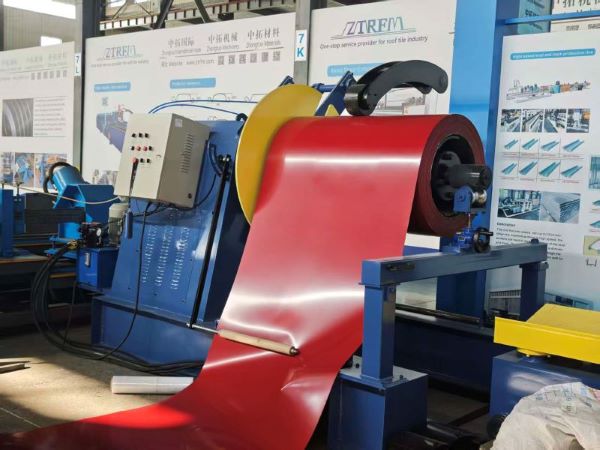
Feeding and uncoiling group
1.Hydraulic entry coil car
2.Hydraulic decoiler
3.Hydraulic press and pinch device
Cutting and buffering group
4. Hydraulic cutter
5. Looper 1
6. Side guide device
7. Slitter
8. Scrap winder
Recoiling and finishing group
9. Looper 2
10. Tension stand
11. Recoiler
12. Exit coil car
Power and control
13. Hydraulic system
14. Electrical system (PLC based)
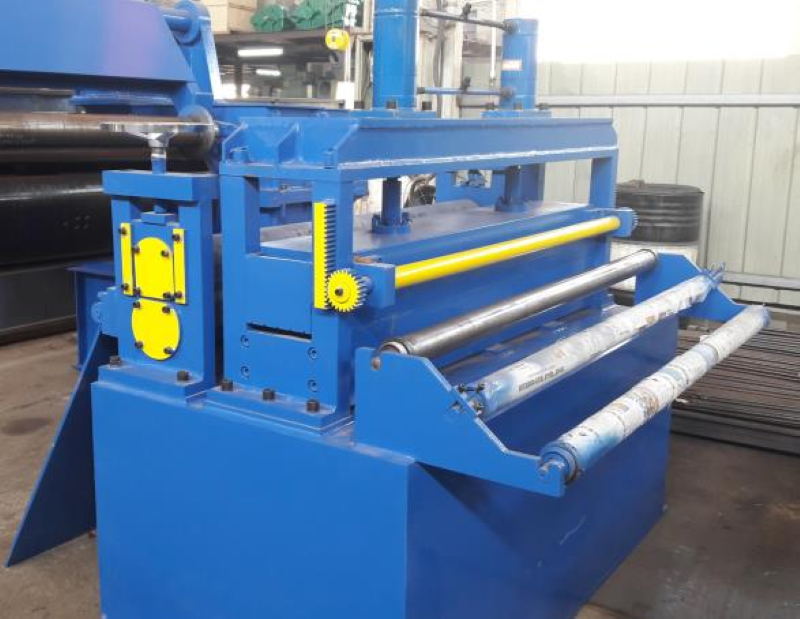
Precision Slitting Performance – Capacity and Accuracy
This line delivers clean, precise strips with a width tolerance of ≤ ±0.05mm. The finished strips are uniform in size, with smooth edges and no burrs. That means you can feed them directly into downstream processing (roll forming, punching, welding) without secondary trimming – saving both labor and time.
How many strips can you get? It depends on your material thickness. Below are the tested maximum slit quantities:
-
0.3mm → 25 strips
-
1.0mm → 15 strips
-
2.0mm → 8 strips
-
3.5mm → 5 strips
【Picture 6 – Slitter blade assembly and protective cover Width 600】
The secret behind this precision is not just the blades. The two loopers (one before the slitter, one after) act as material buffer zones. They balance the speed difference between the uncoiling section and the slitting section, effectively avoiding material stretching, stacking, or surface scratching during high-speed operation. The side guide correction device supports width free adjustment from 500mm to 1600mm, keeping the coil feeding exactly in the center position. It prevents material deviation and jumping, which greatly reduces unexpected shutdowns caused by feeding errors.
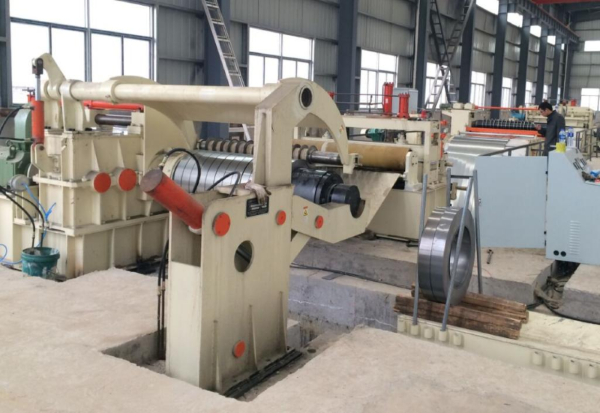
Daily Operation and Output
Manpower needed: 1 mechanical engineer + 2 common workers.
Daily production (8 hours): around 40 tons – a stable rhythm that meets the production demand of a mid‑size processing factory.
The line runs without constant babysitting. The side guide correction device works automatically. The scrap winder collects narrow trim waste neatly, so no messy ribbons pile up on the floor. The two loopers keep the strip tension even, so you don't have to stop and re‑thread the line every ten minutes.
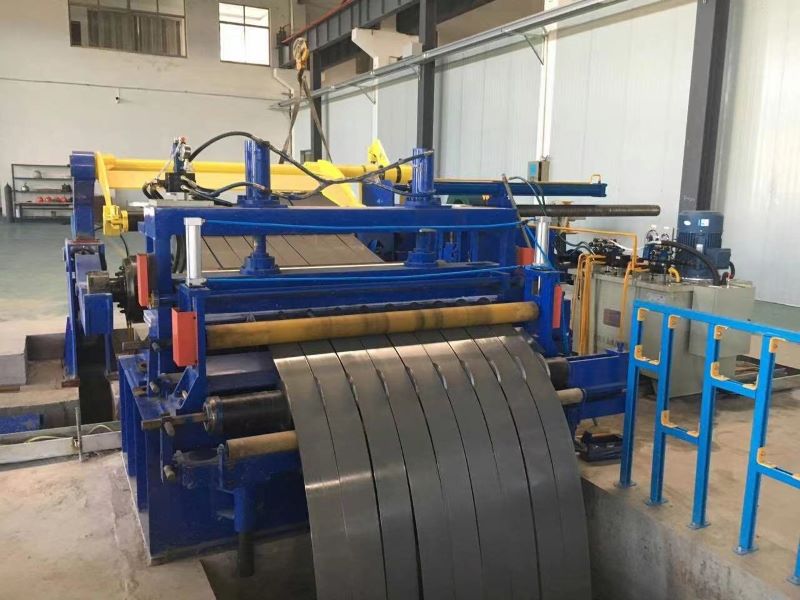
All these features come from a scientific power distribution design that avoids local overload, ensuring synchronous and stable operation of every functional unit. The straight linear layout not only saves workshop land occupation but also makes it easy to connect with other automated production lines downstream.
Service and Support
-
Test report and inspection video provided before shipment
-
1‑year warranty
-
Professional installation guidance (on‑site or remote)
-
Regular maintenance suggestions
Customization Available
We design standard and non‑standard slitting line solutions based on your actual raw material thickness, coil width, workshop space, and daily output.
Voltage, frequency, material thickness range, and the list of component units can all be adapted to your needs.
For price, technical drawings, or a customized solution, please contact us using the information below.
Contact: Elliot liu
Email: cnzt006@zhongtuocn.com
WhatsApp: 008615127728988