
T Bar Roll Forming Machine for Modern Suspended Ceiling Production
While installing a suspended ceiling may appear simple in our daily experience, behind every level and aesthetically pleasing ceiling lies a precisely engineered metal framework. The T-Bar Roll Forming Machine is specifically designed to manufacture the critical support profiles used in the suspended ceilings of offices, shopping malls, schools, hotels, hospitals, and numerous other commercial venues.
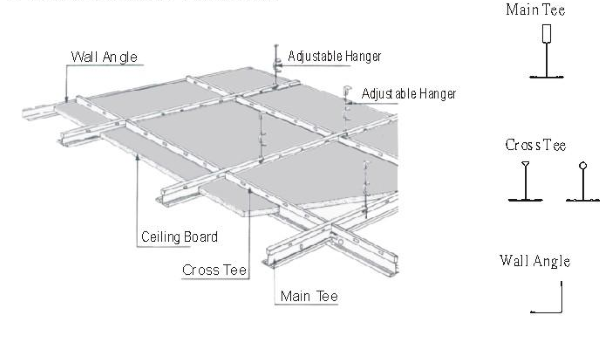
From Main Tees to Cross Tees and Wall Angles, the entire production process—encompassing feeding, punching, forming, and cutting—is fully automated. The result is a robust yet visually appealing ceiling grid system that enables installers to work more efficiently while maintaining a clean, professional aesthetic.
For manufacturers, this production line is about more than just output volume; it is equally about ensuring consistent product quality, alleviating labor burdens, and making daily production operations more manageable.
What is a T Bar Roll Forming Machine?
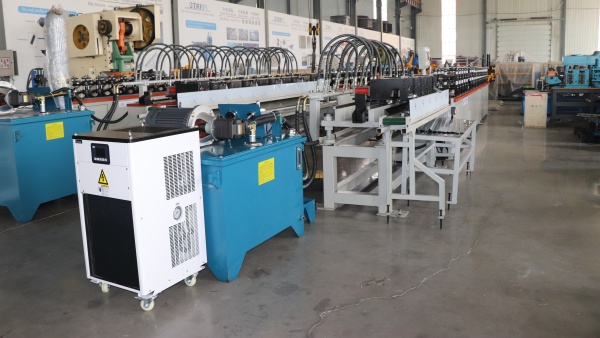
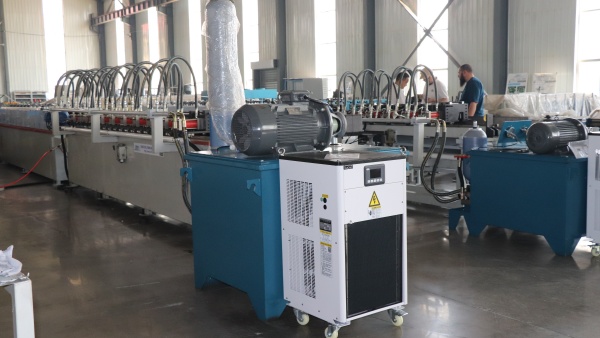
The T-Bar Roll Forming Machine is specialized industrial equipment capable of automatically processing fed-in metal coils into T-shaped profiles; it is primarily utilized for constructing the framework structures of suspended ceilings. These machines perform continuous operations—including roll forming, punching, and cutting—to manufacture profiles such as Main Tees, Cross Tees, and Wall Angles with high precision and speed.
Key Aspects of the T-Bar Roll Forming Machine:
Applications: Production of T-shaped profiles used to support ceiling panels in residential, commercial, and office spaces.
Production Process: Employs a series of rollers to cold-form metal into a "T" shape. The production line typically incorporates hydraulic punching units (for creating connection holes) and cutting units.
Automation and Efficiency: Modern production lines are capable of rapidly manufacturing profiles.
Advantages: These machines deliver high-quality, consistent, and robust metal frameworks, while simultaneously reducing labor costs compared to manual production methods.
What Manufacturers Gain from This Production Line
For many factories, stable production matters more than simply chasing high speed.
A reliable T Bar Roll Forming Machine helps manufacturers:
- Reduce material waste
- Improve delivery efficiency
- Lower labor dependence
- Keep product dimensions consistent
- Handle large project orders more confidently
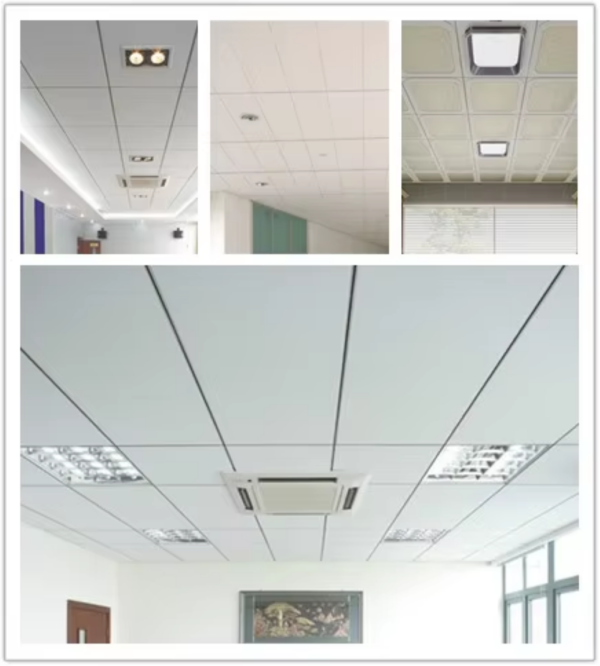
Over time, stable production quality also helps companies build stronger relationships with distributors and project contractors.
Three Complete Production Lines Working Together
A full suspended ceiling solution normally includes three different machine lines. Each one focuses on a specific profile, but together they create the complete ceiling framework system.
Main Tee Roll Forming Machine
The Main Tee profile acts as the primary support structure of the suspended ceiling system. It carries the main load and keeps the ceiling balanced over large areas.
The finished Main Tee profiles are straight, stable, and easy to install.
Cross Tee Roll Forming Machine
Cross Tee profiles connect the Main Tee sections and help create the ceiling grid layout.
Because these profiles require precise locking positions, the punching system plays a very important role during production. A stable punching structure helps ensure that the final installation fits tightly without gaps.
This production line is suitable for continuous automatic manufacturing and can maintain smooth operation during long working hours.
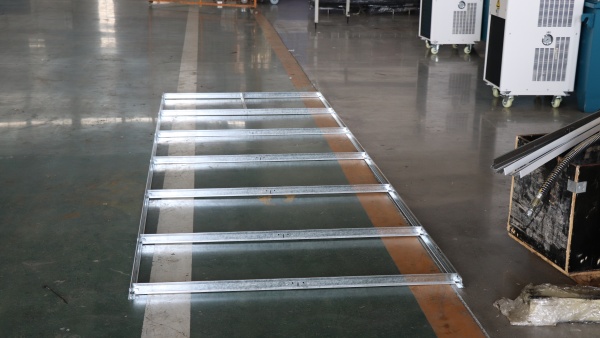
Wall Angle Roll Forming Machine
Wall Angle profiles are installed around the wall edges to support the outer side of the ceiling system.
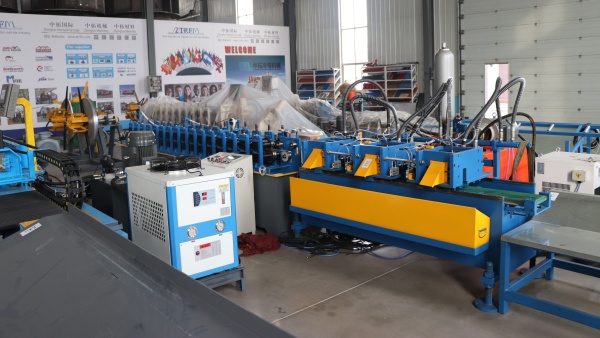
Compared with Main Tee and Cross Tee profiles, the Wall Angle process is usually simpler, but profile straightness and cutting precision are still important during installation.
The machine forms clean edges and smooth surfaces, helping improve the final appearance of the ceiling project.
Common Ceiling Grid Profile Sizes
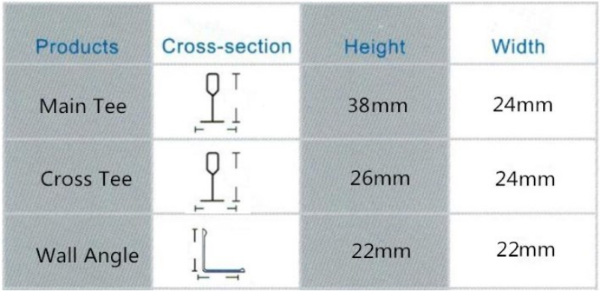
Different markets use different ceiling specifications, so the machine can be adjusted for multiple profile standards.
| Product | Height | Width |
| Main Tee | 38 mm | 24 mm |
| Cross Tee | 26 mm | 24 mm |
| Wall Angle | 22 mm | 22 mm |
This production line can also be customized to produce other profiles based on project requirements.
Main Technical Parameters
| Item | Specification |
| Voltage | 380V 50Hz 3 Phase |
| Cutting Type | Hydraulic Servo Tracking |
| Control System | PLC Touch Screen |
| Shaft Material | 45# Steel |
| Roller Material | Cr12 Heat Treatment |
| Cutting Tolerance | ±1 mm |
How the Production Process Works
Although the three machine lines produce different profiles, the production logic is very similar.
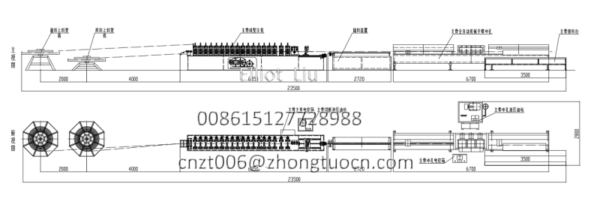
Step 1 Material Feeding
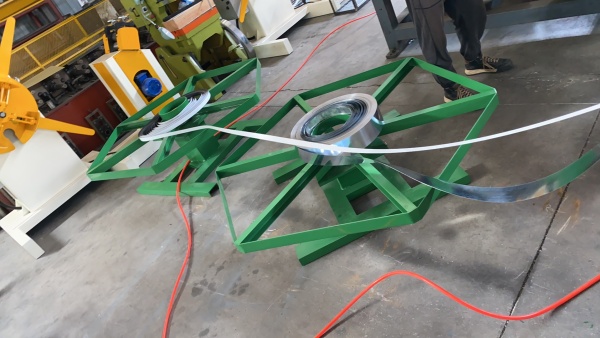
Metal coils are placed on the decoiler and fed smoothly into the machine line. Stable feeding is important because it affects the accuracy of every later process.
Step 2 Roll Forming
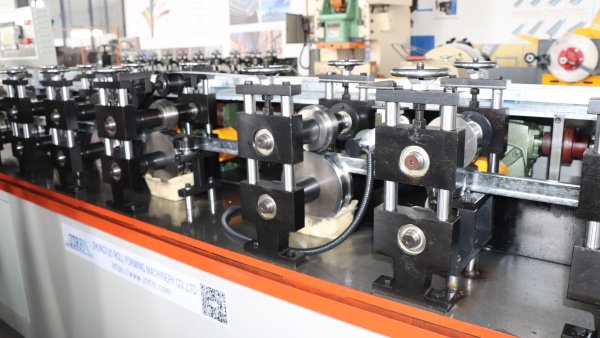
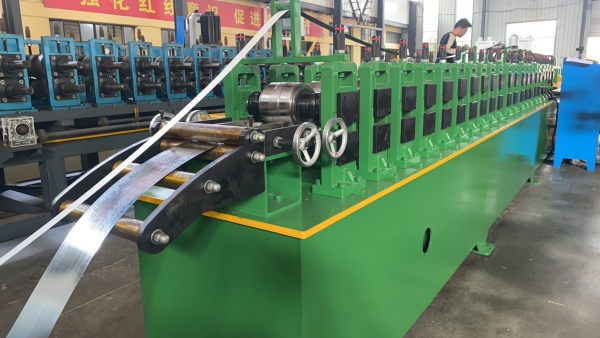
The strip passes through multiple roller stations little by little until the final profile shape is completed.
This gradual forming method helps reduce deformation and keeps the product surface smooth.
Step 3 Punching and Hole Positioning
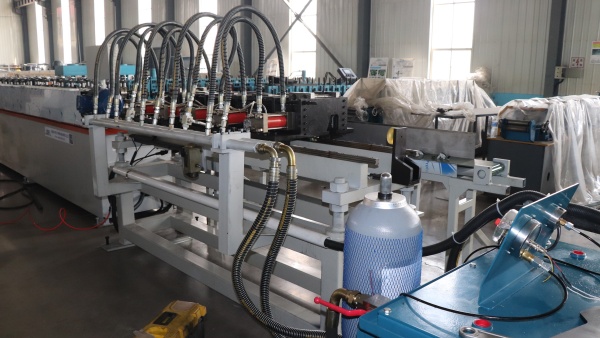
The hydraulic punching system creates locking holes and connection positions based on the profile design.
This stage needs good precision. Even a small deviation may affect final installation.
Step 4 Automatic Cutting
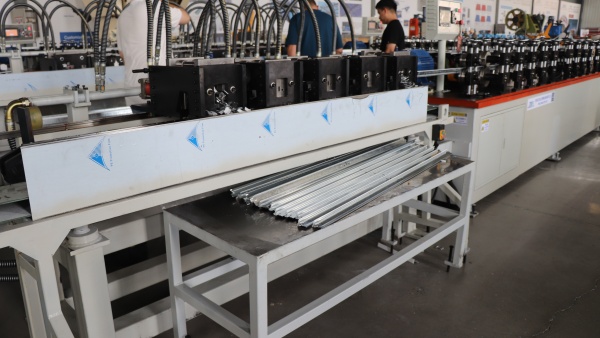
After forming, the profile enters the cutting section. Servo tracking cutting allows continuous production without stopping the line.
This helps improve production efficiency and keeps cutting length more accurate.
Key Machine Components That Improve Stability
Strong Machine Frame
The machine body uses welded steel construction with heat treatment. During long-term production, the structure remains stable and reduces vibration.
Precision Rollers
The roller sets directly affect the final profile shape. Proper roller processing helps improve straightness and connection accuracy.
Hydraulic Cutting System
Hydraulic cutting provides stable operation and clean cutting edges, especially during continuous production.
PLC Touch Screen Control
Operators can adjust machine parameters directly through the touch screen interface. Daily operation becomes simpler and easier to manage.

Frequently Asked Questions
1.What materials can this machine process
The machine is mainly suitable for galvanized steel coils and aluminum coils used for suspended ceiling systems.
2.Can different profile sizes be produced
Yes. The machine can be customized for different profile specifications and market standards.
3. Does the machine support continuous production
Yes. The automatic feeding, forming, and cutting system allows continuous production with stable running performance.
4.Can the punching design be customized
Yes. Hole positions and locking structures can be adjusted according to customer drawings and installation requirements.
Selecting the right T-bar roll forming machine is not merely about purchasing equipment; it is about establishing a more stable and efficient production process to drive future business growth.
If you would like to learn more about machine configurations, profile customization, or complete production solutions, please contact our specialists using the contact details provided below.
Contact: Elliot liu
Email: cnzt006@zhongtuocn.com
WhatsApp: 008615127728988