
How Does the Drywall Channel Packing Machine Work
You might be searching for this answer right now. Every day, dozens of tons of channels come off your production line. Your workers bend over again and again to move them onto pallets. Their backs hurt. You want a drywall channel packing machine that can take over this job.
Manual stacking brings more than just physical strain. Some stacks come out crooked, others lopsided. When your customer opens a bundle, it falls apart. Your forklift driver has to go around each stack carefully, afraid of knocking it over. You have dealt with these headaches for too long.
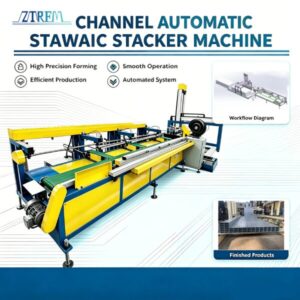
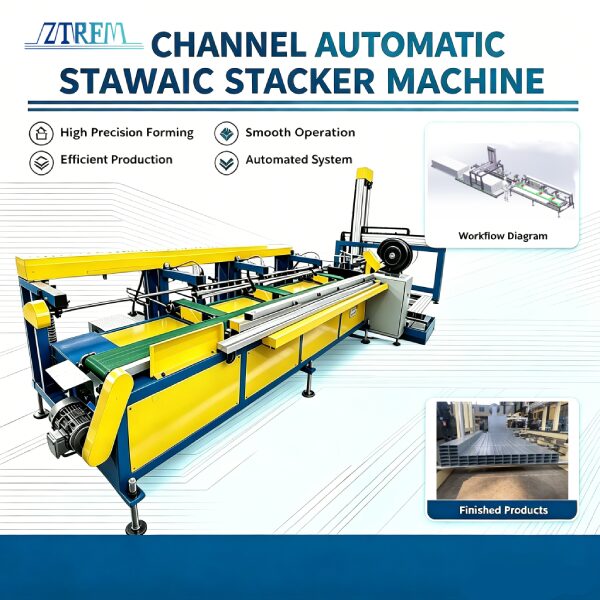
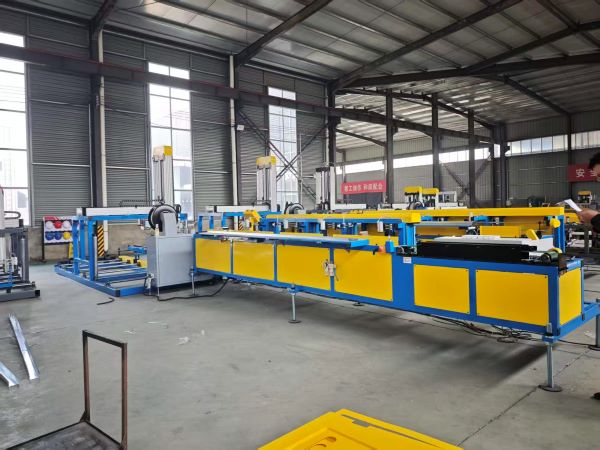
Our drywall channel packing machine steps in to handle this work. It takes each channel from the conveyor line and places it onto the pallet according to the layer count and arrangement you set. The finished stack comes out square and neat. The forklift can enter from any direction.
Where You Can Use This Machine
The drywall channel packing machine works well in these situations:
-
at the end of a light gauge steel channel production line, for automatic palletizing of finished channels
-
for automatic stacking of various profiles and tubes
-
on production lines that run multiple specifications and need frequent changeovers
-
in high capacity workshops that run 24 hours a day
-
in factories that want to reduce physical labor in material handling
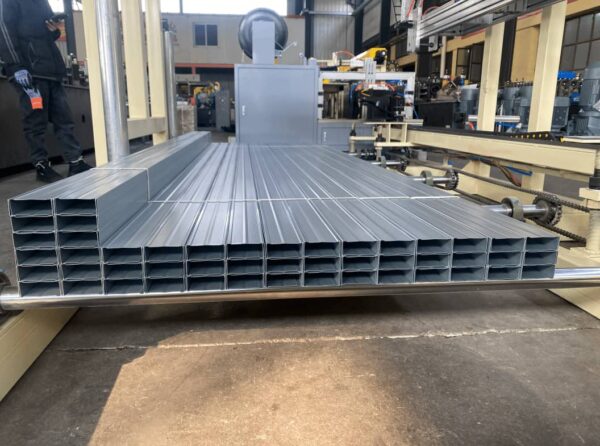
Stacking situation of the keel packaging machine
Technical Reference Parameters
| Parameter | Typical Value |
|---|---|
| Applicable channel length | 2.6 to 4.0 meters (maximum) |
| Working speed | 70 meters (maximum) for 3 meter channels |
| Machine footprint | 9.0 meters long by 2.5 meters wide |
| Packaging width range | 900 to 1200 millimeters |
| Maximum packaging height | 850 millimeters |
| Bundle quantity | 24 pieces per bundle, 4 layers by 3 columns by 2 rows |
| Power supply | 380V 50Hz three phase |
| Operating language | English and Chinese |
Parameters are reference values and adjustable upon request
The Benefits You Get
Automatic palletizing brings real changes to your shop floor. Your workers no longer bend over to move channels, so the risk of back strain drops significantly. The stacks come out neat and uniform, so your customers do not see loose bundles when they open a package. Your forklift driver can pick up an entire stack directly without worrying about it tipping over.
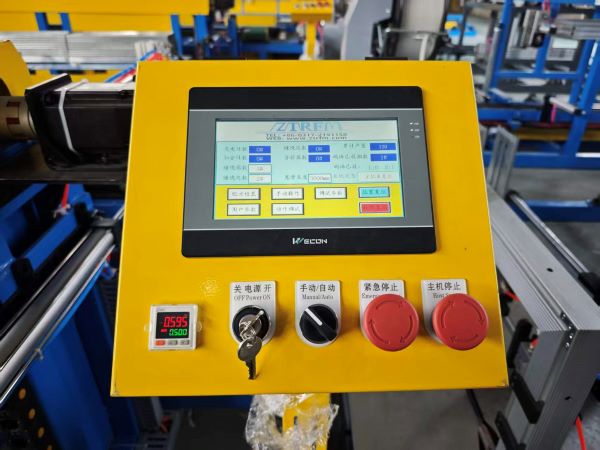
The drywall channel packing machine has a built-in recipe storage system that saves up to 50 channel types. When you switch specifications, just call up the recipe and the servo systems adjust the parameters automatically. You do not need to recalibrate the machine each time. The system uses one touch operation and comes with various alarm functions. The interface supports both English and Chinese.
Structure and Operating Sequence
Operating Sequence
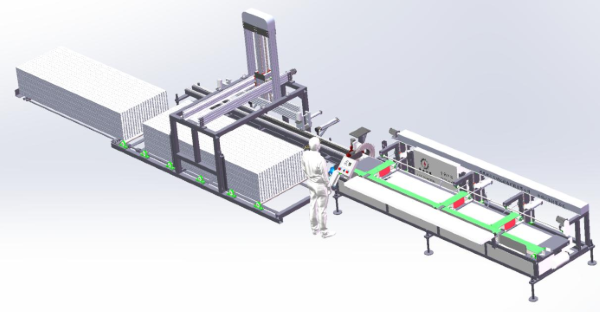
Channels feed in from the conveyor line. A sensor detects each channel's arrival, then the clamping device lowers and grips it. The movement system carries the channel to the designated position above the pallet. The clamping device releases and the channel drops into place. This cycle repeats until the stack reaches the preset layer count.
Structural Components
The drywall channel packing machine consists of these core parts:
-
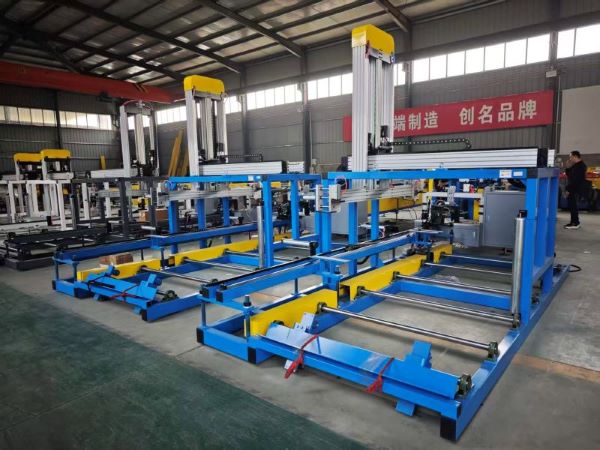
Frame: the equipment's backbone, rigid and wide-span, mounted directly above the conveyor line
-
Movement system: includes both horizontal movement and vertical lifting
-
Clamping device: handles gripping and releasing of channels
-
Control system: coordinates all actions through a touchscreen
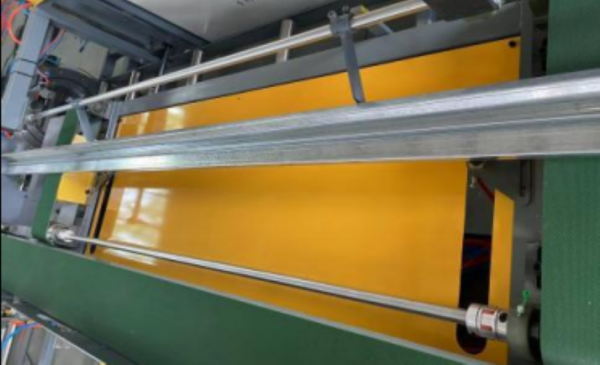
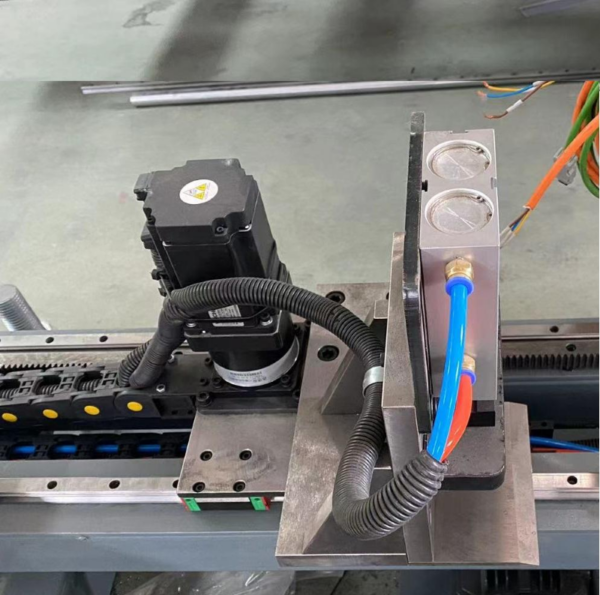
The clamping parts use soft rubber covering, and the cylinder pressure is adjustable. Even 0.3mm thin channels will not get damaged. The palletizing support plate uses folded forming with no welded seams, so it will not crack. The base uses 120 by 80mm square tubes, which makes it easy for forklifts to approach from multiple directions. The heavy duty cable carrier ensures long term stability.
How to Judge a Good Pallet Stacker
When you evaluate equipment, you can look at several factors. Check the drive system. Servo drives give you better precision than stepper or pneumatic systems, and they do not lose steps at high speeds. Look at the clamping protection. Soft rubber covering protects the product surface from scratches. Examine the changeover capability. More recipe storage means faster specification changes. Assess the structural strength. Heavy duty profiles and folded support plates last longer than light duty alternatives.
The drywall channel packing machine uses servo gear rack transmission on its pulling section, specifically designed for high speed and long travel. The soft rubber clamping works with adjustable cylinder pressure to protect the channel surface. The 50-recipe storage plus one-touch recall lets you change specifications in just 10 seconds.
Let Us Help You Understand This Clearly
When you searched for how a pallet stacker works, you were not really looking for complex theory. You wanted to know if this machine can solve the real problems in your workshop. To judge whether a pallet stacker is right for you, look at three things. Positioning accuracy determines whether each channel lands in the right place. Clamping reliability tells you whether the channel might slip or get damaged. Changeover efficiency shows you how long it takes to switch between different specifications. Once you understand these three points, you can decide which configuration fits your production line.
Whatever concerns brought you to search that question, whether you want to save labor or improve efficiency, we can tailor a solution for your specific operating conditions. Feel free to reach out to us anytime. We would be happy to understand your requirements and help you find the right configuration.
Drywall Channel Packing Machine
Metal Channel Automatic Stacker Machine Ensures Smooth Exports to Europe and the US with PP Strapping
Channel Automatic Stacker Machine For Profile Production Line Matching