
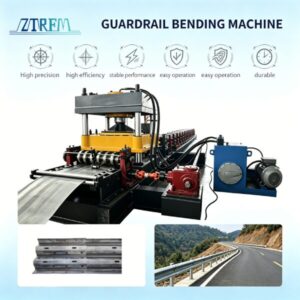
Guardrail Bending Machine 3 Key Advantages for Solving Bending Pain Points
What troubles production managers most in bending operations? Inconsistent forming angles, frequent equipment downtime, and unsynchronized station speeds that cause wrinkling or thinning of the steel sheet.
These problems waste material and directly delay deliveries. Our guardrail bending machine uses well designed station allocation and synchronized drive systems to control bending accuracy and running stability from the start, helping your line reduce stoppages and scrap.
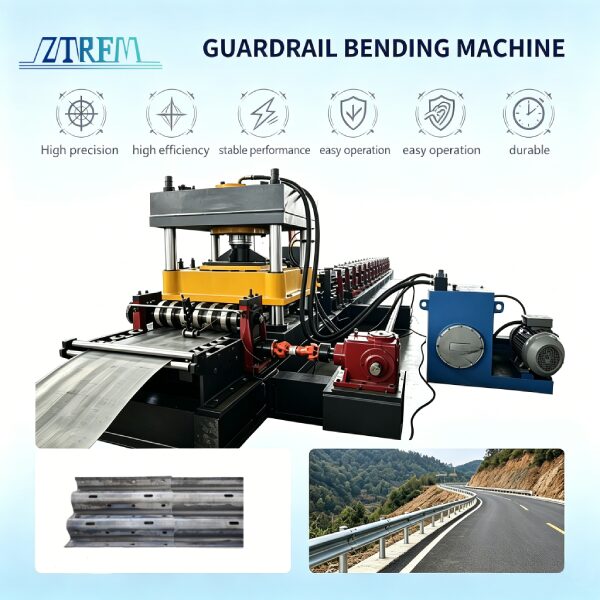
Machine Advantages
Many problems in bending come down to equipment design, not operator skill. This guardrail bending machine reduces the chance of failures in several ways.
-
Stable forming: 15 stations distribute the total deformation evenly. The sheet forms gradually, so you don't get angle deviation or springback.
-
Synchronized drive: All stations run at the same line speed. The sheet experiences bending force only, without wrinkling or thinning.
-
Reliable hydraulics: The hydraulic system handles punching and cutting only, not continuous bending. Its short duty cycle means less wear on seals and valves.
-
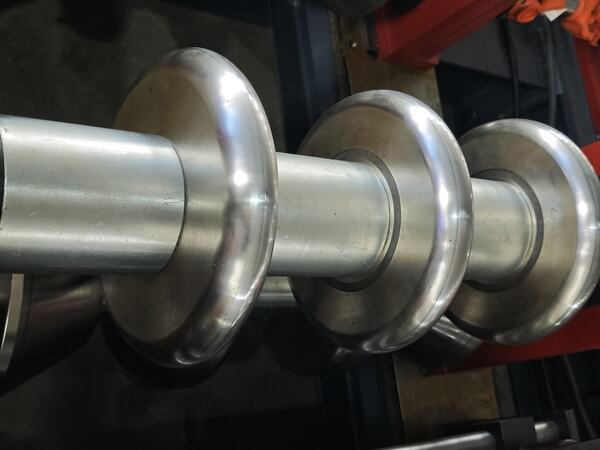
Durable rollers: Roller surfaces resist marks and scratches, so you replace them less often. This matters most when processing 2.5mm to 4.0mm sheet.
-
Fully automatic: A PLC ties all steps together. Set the parameters on the touchscreen and the line runs without frequent adjustments.
-
Flexible adaptation: Switch thickness or material without changing rollers. When order specifications shift, the machine keeps working.
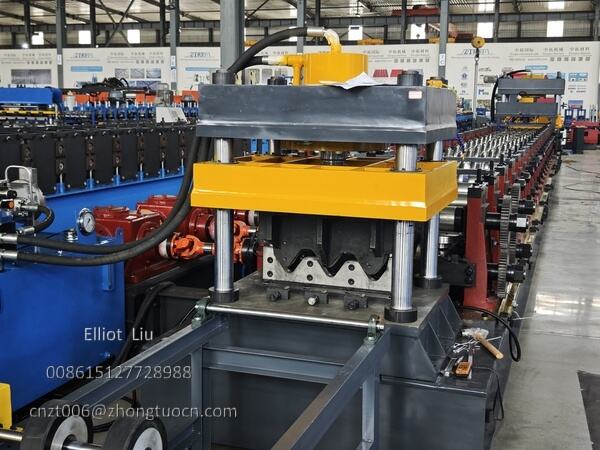
Equipment Overview
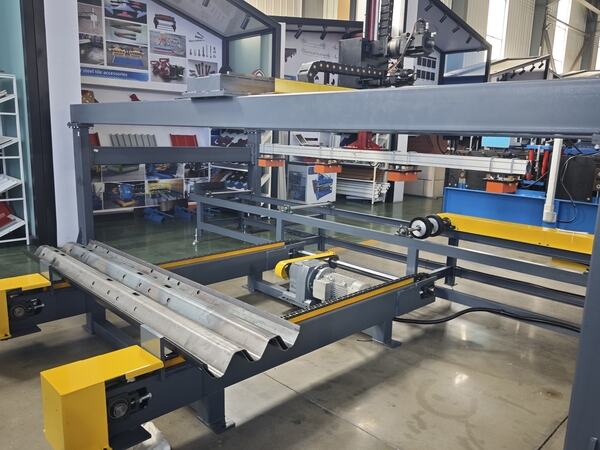
Have you wondered how a complete guardrail production line actually runs from start to finish? This is a continuous line that integrates uncoiling, leveling, punching, forming, and cutting. It produces highway guardrail panels, and the whole process runs automatically from coil to finished part.
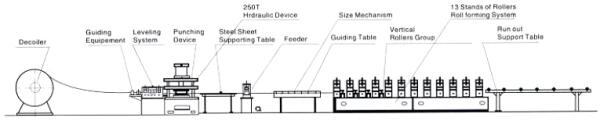
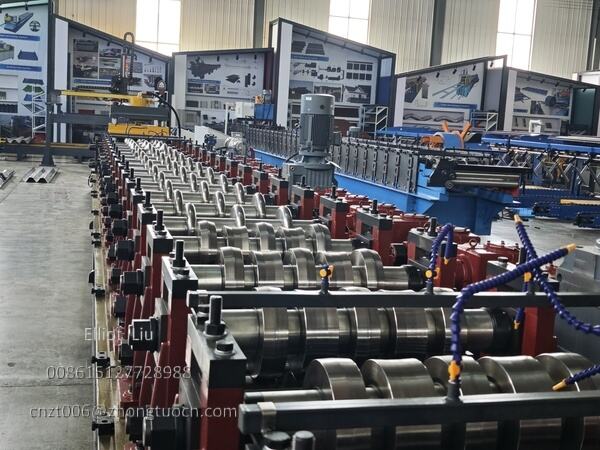
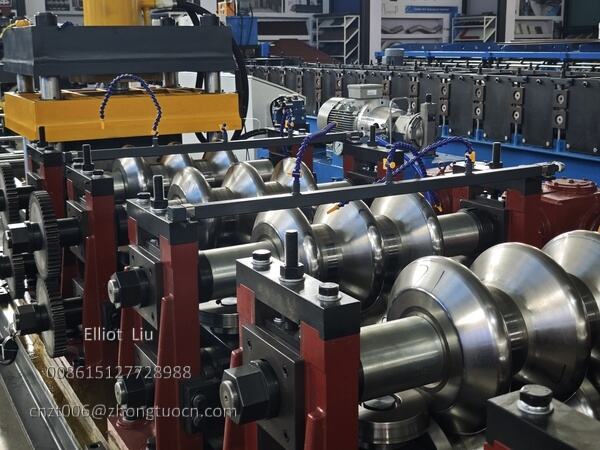
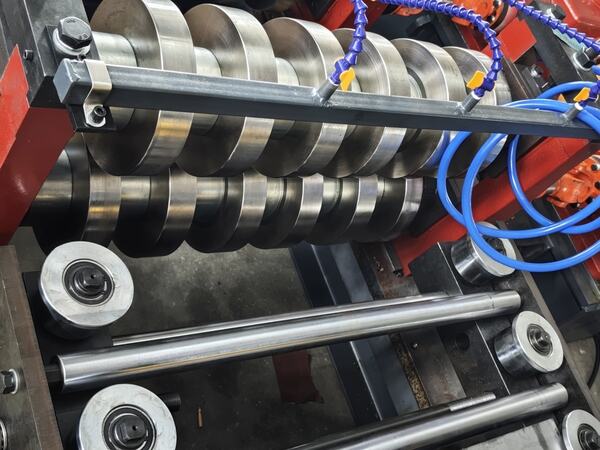
Forming is the heart of the line. Fifteen fixed driven forming stations shape the profile step by step, with each station handling a small portion of the total bend. With 3 sets of side rollers controlling the sheet edges, the forming process avoids material jams or stops caused by uneven deformation.
Forming and Drive System
We mentioned synchronized drive as one of this guardrail bending machine's core features. Let's look at how it actually works.
You may have experienced sudden line stoppages. When you check, you find that different stations are running at different speeds. If the front stations run faster than the rear ones, the sheet gets pulled thin. If the front runs slower, the sheet bunches up and wrinkles.
This machine uses 13 synchronized distribution gearboxes between the motors and the forming stations. These gearboxes distribute power from the two motors evenly to all 15 forming stations, so each station runs at the same line speed. The sheet sees bending forces only, with no extra pulling or squeezing. Even after hours of continuous production, you won't get material bunching or thinning from speed differences.
Applications and Finished Products
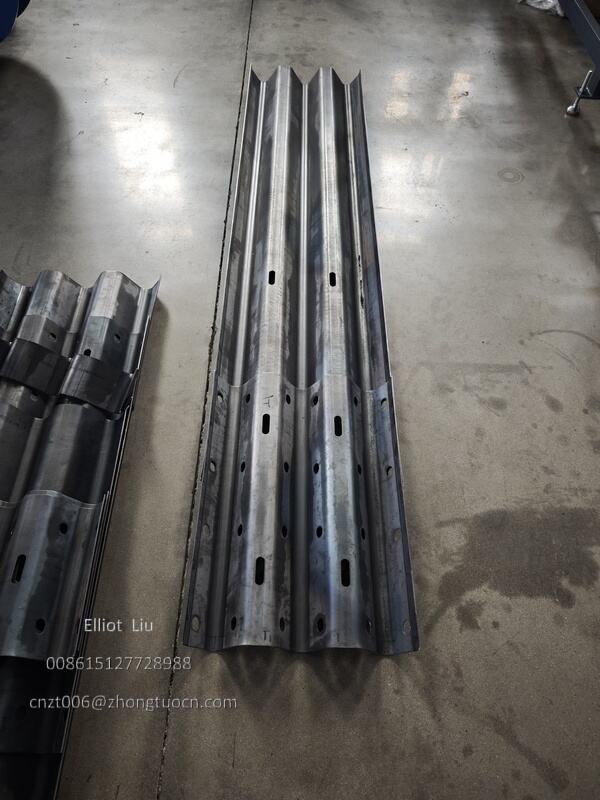
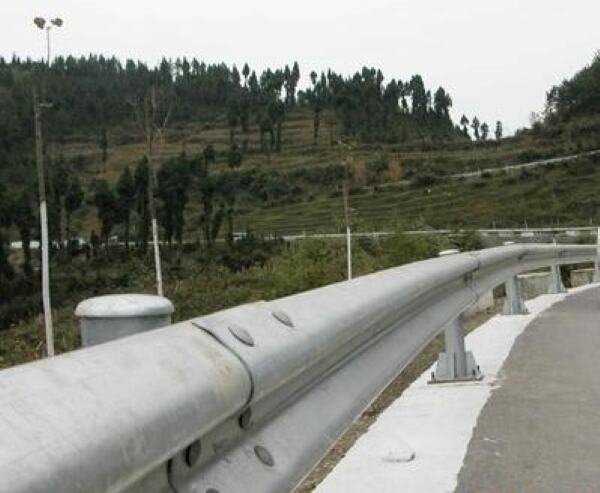
Where do the formed panels actually go? This guardrail bending machine produces panels used in the following scenarios:
-
Continuous protection along highways, where the panel deforms upon vehicle impact to absorb collision energy
-
Median barriers on primary roads to prevent cross traffic collisions
-
Side protection on mountain curves and cliff edge roads
-
Transition sections between bridges and tunnels
-
Urban expressways and elevated road barriers
How to Evaluate a Bending Machine's Forming Quality
We've covered how this machine handles forming and drive. When you look at other bending equipment, here are three things to check.
First, station count and allocation. Too few stations means each step takes too much deformation, which can cause cracking or springback. Too many stations adds cost and floor space with little gain. Fifteen stations are a proven balance for guardrail forming.
Second, the drive method. Are the stations mechanically synchronized through gearboxes, or does the system rely on electronic control? Gearbox synchronization tends to be more reliable and responsive.
Third, roller material. Processing 2.5mm to 4.0mm sheet puts serious wear on rollers. Gr15 bearing steel with HRC55-60 hardness treatment is a common industry choice for this application.
Guardrail Bending Machine Market Trends
Once you understand the key criteria for forming quality, it helps to look at the broader market picture. Infrastructure investment continues to grow worldwide. Developing countries are building new highway networks, while developed nations are upgrading existing road barriers. This means guardrail demand stays steady over the long term.
Equipment buying decisions usually come down to two things: your ability to fill current orders and your flexibility for future ones. If a line can only make one specification, it may sit idle when order patterns change. That's why more customers are choosing equipment with wide thickness coverage and material compatibility.
Technical Parameters
Below are the full specifications for this guardrail bending machine.
| Parameter | Specification |
|---|---|
| Material types | Galvanized steel, mild steel, cold rolled steel, carbon steel, Q235 |
| Material thickness | 2.5 mm – 4.0 mm |
| Feeding width | 490 mm |
| Finished cover width | 312 mm |
| Finished profile height | 90 mm |
| Forming stations | 15 fixed driven forming stations |
| Side rollers | 3 sets |
| Synchronized distribution gearboxes | 13 sets |
| Main motor power | 22 KW × 2 |
| Forming speed | 15 – 20 m/min |
| Finished length accuracy | 4320 mm ± 2 mm |
| Roller material | Gr15 bearing steel, hardness HRC55-60 |
| Hydraulic press | 250T / 315T four post type |
| Decoiler | 10T hydraulic type |
| Leveling rollers | 9 rollers |
| Finished product support table | 5 m |
| Control system | PLC |
| Reference machine dimensions | 30 m × 4.5 m × 2.5 m |
Other Machines in This Series
This guardrail bending machine is part of a broader product family. Here are other equipment types we offer:
-
Roof tile roll forming machine
-
Floor deck roll forming machine
-
Rack column roll forming machine
Closing
Angle deviation, hydraulic issues, and synchronization problems ultimately come down to paying too little attention to forming logic and drive method when selecting equipment. If you're evaluating a new bending machine, or if your current line keeps having these problems, we can offer specific suggestions based on your material thickness, output requirements, and shop floor conditions. Feel free to reach out anytime.
Contact: Elliot liu
Email: cnzt006@zhongtuocn.com
WhatsApp: 008615127728988