

High Speed Cutting Machine: Three Major Problems of Excessive Speed
Many workshop operators wonder about the same thing when commissioning their cutting machine: what happens if we push the cutting speed higher? Orders are piling up and production pressure is mounting, so it's tempting to run the equipment at its limit. But in actual production, when speed goes up, sheet quality often goes down.
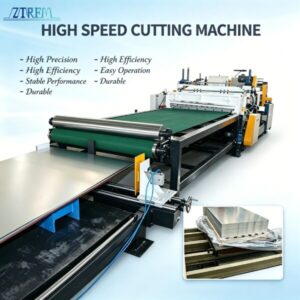
This High Speed Cutting Machine is designed with a speed of 25 meters per minute. It's not that the machine cannot run faster, but at this speed, cutting precision and equipment reliability are technically assured.
Applications
To understand why 25 meters per minute makes sense, we need to look at what this equipment does.
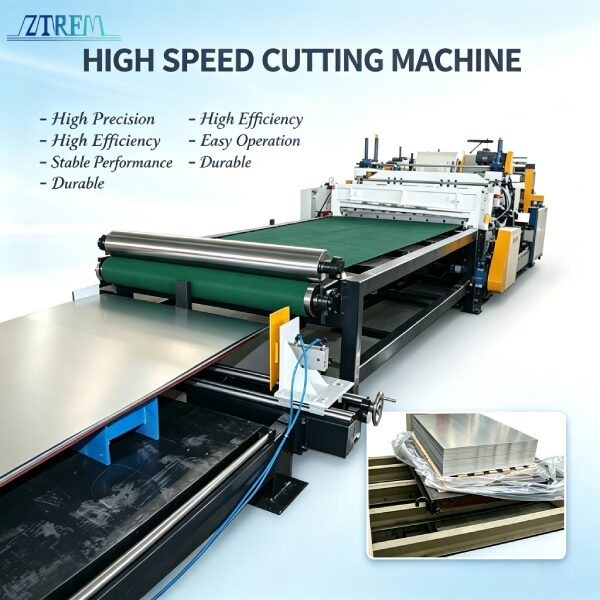
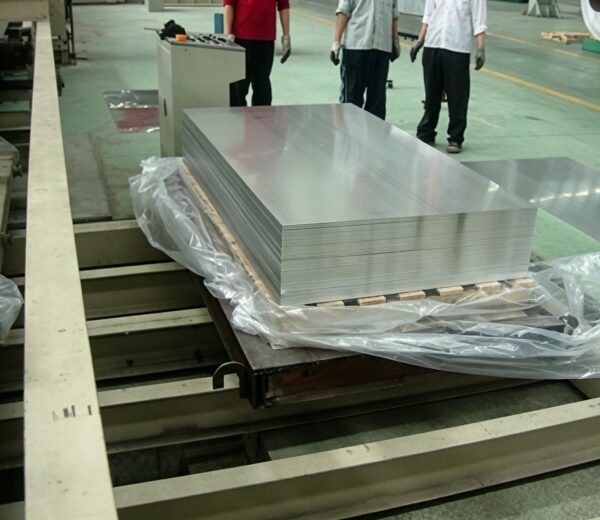
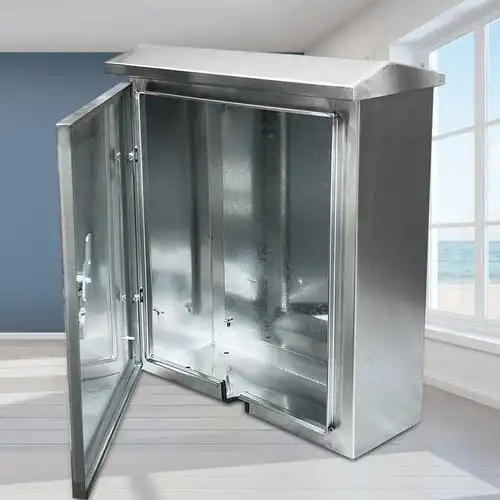
This High Speed Cutting Machine mainly processes CR and GI sheets, covering thicknesses from 0.4mm to 4mm and widths from 500mm to 1500mm. The cut to length sheets go to downstream processes for:
-
Purlins, decking, and wall panels for steel structure buildings
-
Uprights, beams, and shelves for storage racking systems
-
Rails, posts, and connectors for solar mounting structures
-
Troughs and covers for cable tray systems
-
Truck floor panels and stamping blanks for automotive parts
-
Light gauge steel framing and rolling shutter doors
These applications all have clear requirements for dimensional accuracy and cut surface quality. Out of tolerance means scrap.
Excessive Cutting Speed: Problems in Three Areas
Cut Quality
When speed goes up, cut surface quality is usually the first to suffer. At excessive cutting speeds, the blade does not have enough time to penetrate the metal sheet cleanly. Instead of being sheared cleanly, the material gets pulled and stretched. This is called shear drag. The cut edge develops burrs, rough surfaces, and even micro cracks. These defects may not be visible right away, but they show up in downstream stamping, bending, or welding operations.
Dimensional accuracy is an even bigger concern. At high speeds, the control system struggles to maintain precise synchronization. Cut lengths start to drift. Sheets set at 2 meters come out a few millimeters longer or shorter. You don't notice until assembly, when nothing fits.
Equipment Life
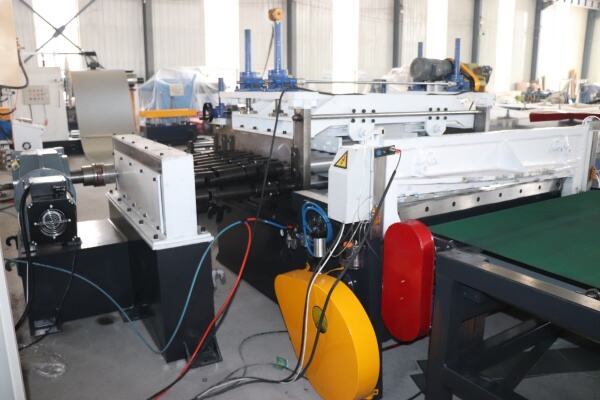
Higher speed means more wear. Belts and chains in the drive train take heavier loads. Wear accelerates, and breakdowns become more frequent. The blade situation is even more obvious. High speed shearing means higher impact frequency and more heat buildup. Tool wear multiplies.
Frequent blade changes and repairs eat up any time you saved by running faster. Higher speed, lower output.
Operational Safety
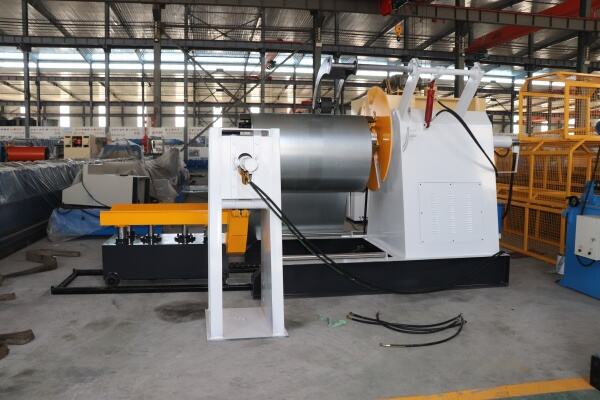
High speed equipment demands more from the operator's monitoring ability. When something goes wrong, a material wander, a feed jam, a blade stall, the operator has very little reaction time. The faster the machine runs, the more severe the consequences when problems occur.
Why Speed Gets Pushed Too High
Many plants don't intentionally set the speed too high. They just don't understand what the maximum speed rating really means.
Misjudgment During Selection
Many buyers look only at maximum speed when selecting equipment. They assume bigger numbers are better. But maximum speed is usually measured under ideal conditions, specific material, specific thickness, specific length. Change the material or change the spec, and the actual achievable speed is a completely different story.
Overlooking Thickness and Material Limits
Thick sheets and thin sheets have completely different speed requirements. Thin sheets can run faster, but thick sheets need significantly lower speeds. CR and GI materials also differ in hardness and ductility. One speed setting cannot handle all materials.
The Impact of Cut Length
Shorter cut lengths place greater limits on speed. Guillotine shears have physical limits when cutting short lengths at high speed. A 2 meter cut length and a 4 meter cut length cannot run at the same speed.
What This High Speed Cutting Machine Does to Achieve 25 Meters Per Minute
You might wonder how the 25 meter per minute speed was determined.
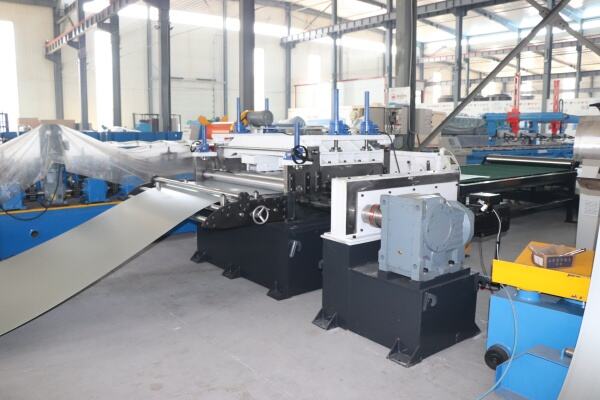
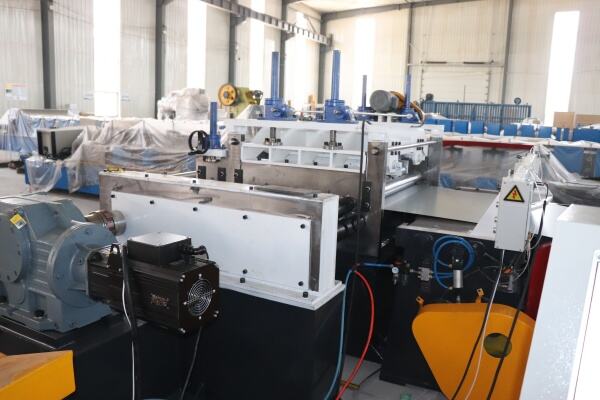
The stable running speed of this High Speed Cutting Machine comes from coordinated work across three stages: leveling, feeding, and shearing. In the leveling stage, 17 leveling rollers and 3 backup roller groups form a four high structure. Needle bearings at both ends of each roller carry the load, ensuring uniform leveling pressure even at high strip speeds. The work roller gap is manually adjusted through a worm gear with two handwheels. This design lets operators make fine adjustments based on actual sheet thickness.
In the feeding stage, a 55KW AC motor drives every roller through independent couplings. All rollers are driven rollers, meaning no driven rollers exist in the system. The strip stays under control throughout the leveling zone with no slippage or wandering, regardless of speed changes.
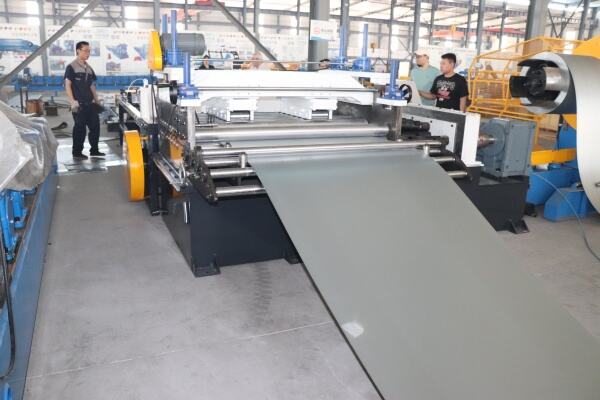
The shearing stage uses a guillotine action cutting from top to bottom. The shear works with an encoder based length setting device. It cuts automatically when it receives the signal from the feeder. The encoder feeds back strip length in real time. The PLC controls the cutting timing based on encoder signals.
This High Speed Cutting Machine completes 6 to 7 cuts per minute at 2 meter lengths and 4 to 5 cuts per minute at 4 meter lengths. To improve cut quality, the shear has a gap adjustment mechanism. Operators set the blade gap based on sheet thickness for a clean cut surface. The blade material and heat treatment process are also carefully selected to safely shear 4mm thick sheets.
Technical Specifications
| Parameter | Specification |
|---|---|
| Material | CR, GI |
| Thickness range | 0.4~4mm |
| Width range | 500~1500mm |
| Coil ID | 480~520mm |
| Coil weight | ≤15 tons |
| Line speed | 25 m/min |
| Leveling roller diameter | Φ84mm |
| Number of leveling rollers | 17 |
| Leveling roller material | GCr15 |
| Hardness | HRC58-60 |
| Diagonal tolerance | <2mm |
| Length tolerance | <±1.5mm |
| Leveling precision | ±1.5mm |
| Power supply | 380V/50HZ/3PH |
| Line footprint | 18m(L)×7m(W) |
Other Equipment in This Series
-
Four high leveling machine
-
Hydraulic shear
-
Receiving and stacking table
-
Hydraulic system
Conclusion
Running too fast just means more time spent on rework and blade changes. It's better to find that "just right" speed where quality is consistent, the High Speed Cutting Machine isn't overworked, and the operator stays comfortable. Every factory has different materials, different orders, and different tolerance requirements. The ideal speed varies accordingly. If you have specific production conditions you'd like to discuss, we're always here.
Contact: Elliot liu
Email: cnzt006@zhongtuocn.com
WhatsApp: 008615127728988