

Why is a metal sheet decoiler indispensable for a noise barrier production line?
Manufacturers of noise barrier panels know that a continuous production line typically involves multiple stages, such as uncoiling, punching, forming, and cut-to-length shearing. If a problem arises at the very first step (uncoiling), every subsequent process grinds to a halt.You may have encountered issues like inner coil deformation causing punching misalignment, surface scratches on galvanized sheets leading to rapid rusting, or uncoiling speeds failing to keep pace with the punch press resulting in material pile-up or snapped steel strips. Ultimately, these problems stem from a single cause: choosing the wrong decoiler. Today, using a noise barrier production line as an example, I’d like to discuss just how much trouble a reliable hydraulic decoiler can save you. Let’s take a look at a metal sheet decoiler to see if it meets your needs.
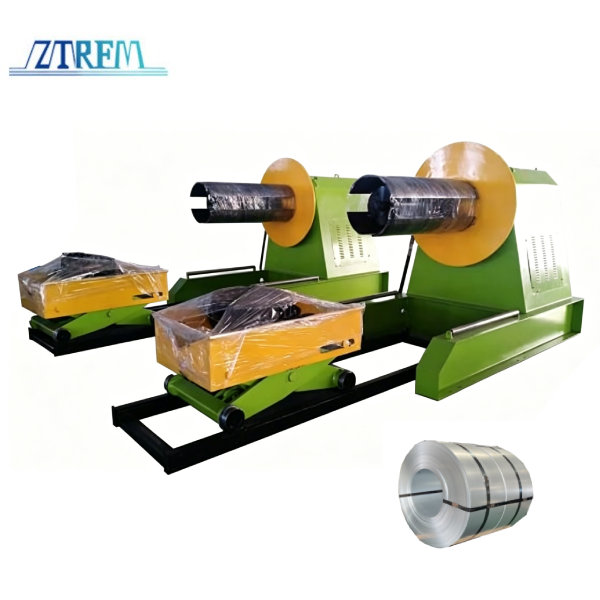
What Specific Requirements Does A Noise Barrier Production Line Have For The Decoiler?
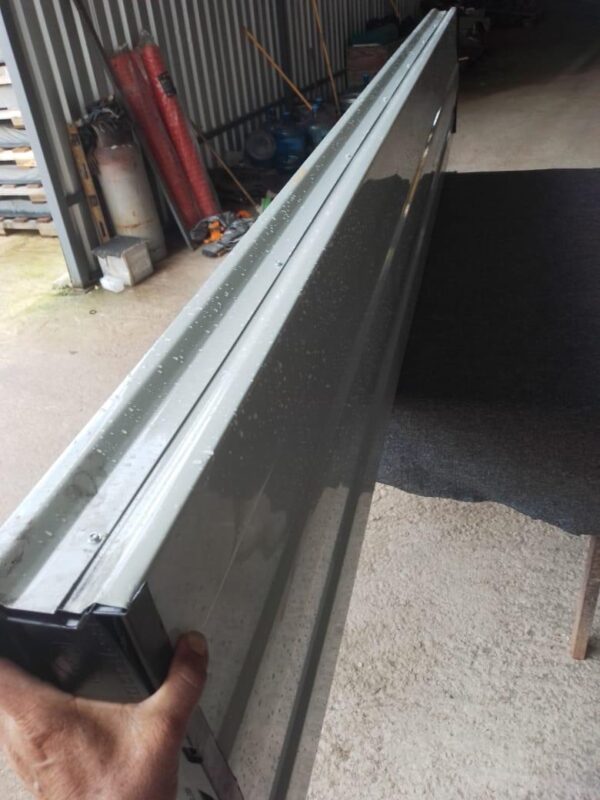
You can commonly use sound absorbing panels (also known as noise barrier panels) on highways, in subway tunnels, and for industrial noise insulation. They typically use galvanized steel, color coated steel, or aluminum sheets. These materials are relatively thin, and their surface coatings are prone to scratching. Furthermore, the panels feature extensive arrays of punched holes; if the tension is unstable during the uncoiling process, the hole positions will shift, rendering the entire panel scrap.
Consequently, the requirements for the decoiler in this production line focus on three key areas:
Surface protection: Any scratching before the material enters the punching press can damage the galvanized layer or the coating.
Stable tension: Punching requires precise positioning; fluctuations in strip speed can lead to deviations in hole spacing.
Rapid coil changes: Orders for sound-absorbing panels often involve diverse specifications and small batch sizes, making frequent coil changes a common occurrence.
The metal sheet decoiler specifically meets these requirements. Let’s break them down one by one.
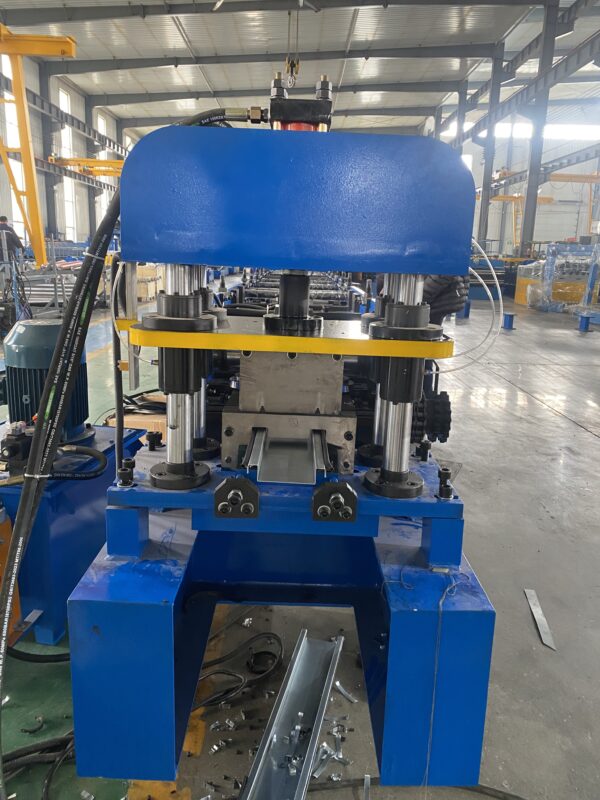
Surface Protection: Preventing Scratches at Contact Points
Many standard decoilers use sliding friction components at material contact points; over time, these leave black marks on the galvanized sheet surface. We specifically install support rollers at key contact points, allowing the steel strip to advance via rolling motion rather than dragging. This detail is crucial for color coated sheets. Once the coating is scratched, exposure to rain causes rust, leading to immediate rejection by customers during inspection.
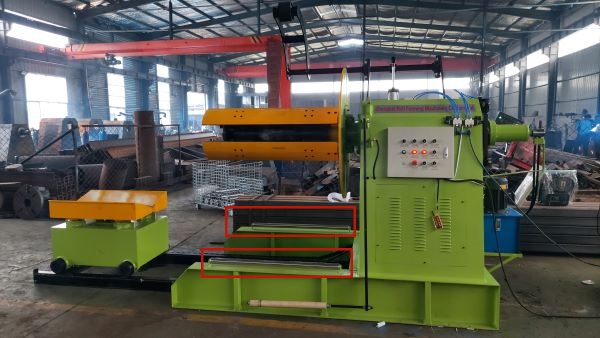
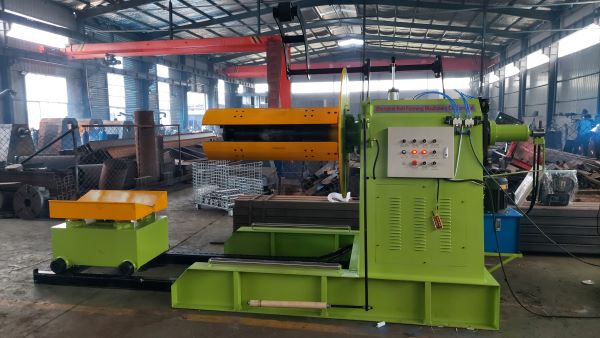
Additionally, have you noticed the expansion system on our sheet metal decoiler? Traditional four-jaw structures force four sharp angles into the coil's inner wall, causing deformation from compression; falling debris can also contaminate the production line. We utilize a sliding-block radial expansion mechanism combined with four support shafts. Once expanded, the inner core forms a near-perfect circle, protecting the inner wall and eliminating the generation of metal shavings.
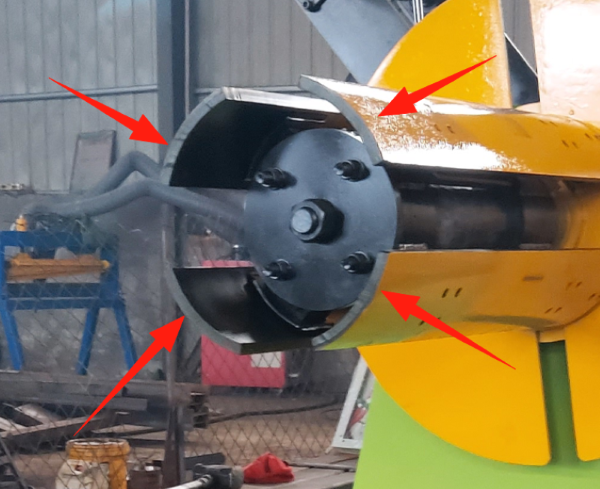
Stable Tension: How the Pneumatic Brake and VFD Work Together
Punching noise barriers requires the steel strip to maintain nearly constant tension before entering the press. How do we achieve this?
The main unit’s variable frequency drive (VFD), a Delta 5.5kW model, controls the uncoiling speed. You can adjust this freely on the control panel or operate it remotely via wireless control.
We install a pneumatic brake at the rear of the main shaft, automatically adjusting resistance based on the feeding speed of the downstream forming machine or press. It prevents sudden locking or excessive looseness that causes the strip to drag on the ground..
By coordinating these two systems, the uncoiling speed perfectly synchronizes with the punching cadence. You won't have to worry about material piling up and damaging the punch, nor about the strip snapping from excessive tension. Customers have told me: "Since switching to this decoiler, our scrap rate has dropped by half."
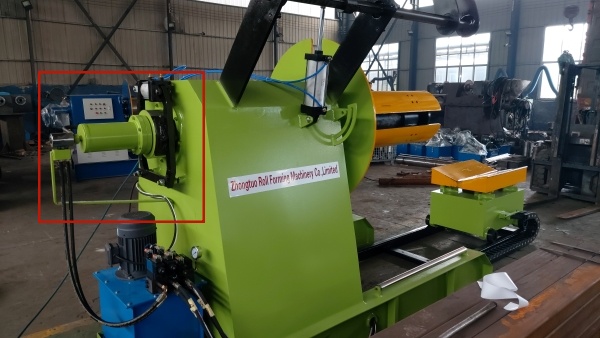
Coil Change Efficiency: Adjustable Spacers and Unloading Carts Save Time
Noise barrier orders often involve changing specifications, such as switching from a 470mm inner diameter coil today to a 570mm one tomorrow. We equip the main shaft with removable adjustment spacers. You can switch between inner diameters of 470mm and 610mm in minutes without replacing the shaft itself. You can handle this operation yourself without waiting for a technician from the manufacturer.
Then there is the physical labor of changing coils. Coils can weigh anywhere from two or three tons to six or seven tons. We use a 5 guide post hydraulic unloading cart, featuring a lifting cylinder with a 110mm bore and 300mm stroke, a Model 400 hydraulic motor for forward movement, and a 3 meter long track. Workers simply press a button on a wireless remote control, and the cart automatically unloads the old coil and pushes the new one into place. Even a female worker can operate it safely. Since there is no need to get close to the rotating coil, it is much safer.
Core Parameter Table
| Parameter | Specification |
| Coil Capacity | 5 Ton / 6 Ton / 7 Ton |
| Coil Inner Diameter | 470-530mm / 570-630mm (±20mm) |
| Main Shaft Diameter | 203mm (Seamless Steel Tube) |
| Hydraulic System | 3 Solenoid Valve Pump Station (4kW) |
| Loading Cart | 5-Guide-Column Hydraulic Cart |
| Control System | Delta Inverter (5.5kW) |
Metal Sheet Decoiler Applications: Where Else Can You Use This Machine?
If you manufacture other products, you do not need to buy a separate decoiler. Its specifications, a 1250mm width and 7-ton load capacity, make it suitable for most cold roll forming and stamping lines. For example:
C/Z steel purlin roll forming machine – Fast coil changes; ideal for project-based orders requiring frequent specification adjustments.
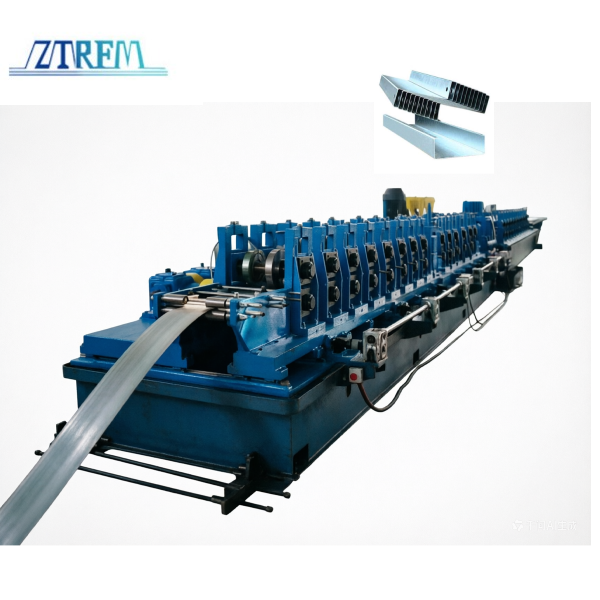
Cable tray production line – Demanding requirements for width and surface finish; the support roller structure is a perfect match.
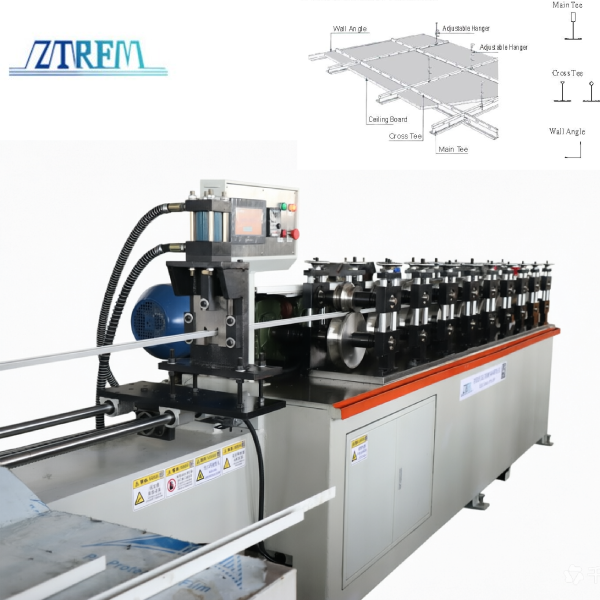
Cut-to-Length/Slitting Line – Serves as the uncoiling unit, compatible with your existing downstream equipment.
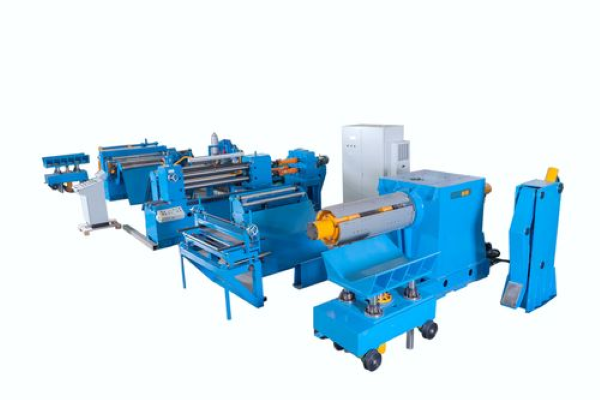
Think of this metal sheet decoiler as a "universal front-end" solution—buy one, and it works across multiple production lines.
Common Concerns
1. "Your metal sheet decoiler costs a bit more than generic brands; is it worth it?"
It is. You are not just buying a pile of steel. You are investing in stable output with no material damage, no breakage, and no downtime. The money you save on a cheap uncoiler is quickly lost to waste and downtime within just a month or two. Plus, we offer a full one year warranty covering everything, including pumps, valves, motors, and inverters, so you can use it with confidence.
2. "I’ve never used a hydraulic model; I’m worried my workers won't know how to operate it."
It comes with a wireless remote control featuring just four or five buttons: coil car forward/reverse, coil car lift, expand/release, and brake. Workers can master it in ten minutes. We also provide operation videos and offer remote support whenever you need them.
3. "You’re far away; what about after-sales service?"
We provide on site installation and commissioning services. If you prefer to install it yourself, we provide video guidance and ship spare parts. Your own workers can resolve most issues simply by swapping out parts.
Get A Quote Or Watch A Video Of The Machine In Action Now
I have outlined the real-world applications and benefits of using this metal sheet decoiler on a noise barrier production line. If you would like to:
Receive a detailed proposal tailored for your coil specifications.
Watch a video of this metal sheet decoiler in action processing galvanized steel.
Understand the price difference between models with and without a coil car.
Please contact us directly. You simply need to provide three details:
The inner diameter, outer diameter, width, and weight of the coils you typically use.
Whether your downstream equipment is a punch press, a forming machine, or both.
Your factory's voltage and frequency, such as 380V/50Hz or other.
We will get back to you as soon as possible
Contact: Elliot liu
Email: cnzt006@zhongtuocn.com
WhatsApp: 008615127728988:
Note: If it is not convenient to contact us right now, feel free to save this information and reach out when you are ready.